The teacher violated a basic safety law, but his defenders devoted far more energy to condemning the apprehension than upholding accountability.

An MMDA road-clearing operation recently caught a public-school teacher riding a motorcycle without a helmet. He was stopped, questioned by Special Operations Group chief Gabriel Go, and issued a citation. Go reminded him that teachers are expected to set an example for their students. Despite the teacher’s request that the encounter not be uploaded, a video with his face blurred was subsequently posted online.

Teacher organizations immediately entered the controversy. They accused Go of humiliating the teacher, questioned the publication of apprehension videos, and demanded action against the MMDA official.

There is a legitimate question about whether government operations should become material for an official’s personal social-media account. But where were these groups when Go used the same method against ordinary motorists and other violators?

They found their voices only when the person apprehended happened to be one of their own.

That selective outrage destroys much of their credibility. If recording and publishing traffic apprehensions are inherently degrading, teacher organizations should have opposed the practice consistently—not merely when a colleague was caught violating the law.

Worse, their vigorous defense made it appear that the teacher’s profession entitled him to softer treatment. They may concede that he deserved the ticket, but their overwhelming emphasis on his embarrassment effectively turned the offender into the victim.

Teachers should be role models for compliance, not a fraternity that closes ranks when one of its members is held accountable. The correct response was simple: acknowledge without qualification that their colleague broke the law, require him to accept the consequences, and remind all educators that the respect accorded their profession carries corresponding responsibilities.

The Philippines is already suffering from a grave learning crisis. Filipino students remain among the world’s weakest performers in reading, mathematics, and science. At such a time, teacher organizations should be concentrating on classroom competence, professional standards, and the deteriorating quality of education—not spending their institutional energy shielding an erring colleague from the discomfort caused by his own actions.

Our teachers demand respect because they shape the youth. Then they must earn that respect through example.

Teach children to obey the law. Demonstrate accountability when caught doing wrong. Improve educational outcomes. And stop behaving as though professional dignity means protection from criticism.

No helmet, no ride. No profession is exempt.


Categories Everyday Absurdity, Partisan Hypocrisy

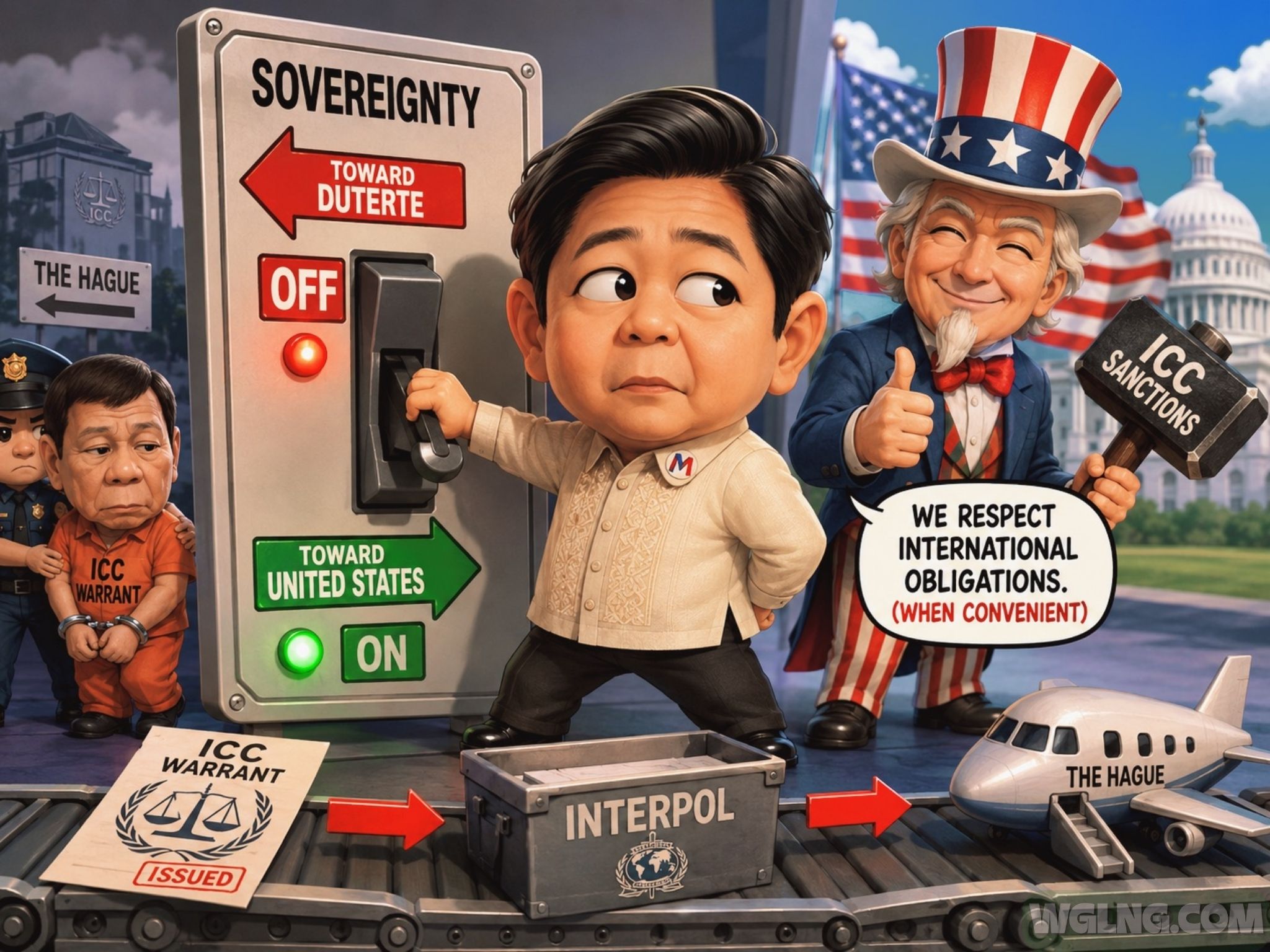
Philippine sovereignty under Marcos appears firm against enemies, flexible toward allies, and silent before Washington.

The United States now wants to cripple the International Criminal Court, denouncing it as a threat to national sovereignty whenever it investigates Americans or close U.S. allies.

Will Philippine President Marcos defend the institution his government found useful when Rodrigo Duterte was arrested and sent to The Hague?

Do not expect it.

The Philippines withdrew from the ICC in 2019, but the Court maintains jurisdiction over alleged crimes committed while the country was still a member. Marcos’s government nevertheless insisted that Duterte’s arrest was carried out through Interpol, not as formal cooperation with the ICC.

That distinction may satisfy government lawyers. Politically, it changes little.

Marcos need not endorse every ICC decision. But after using Interpol cooperation to enforce an ICC warrant while insisting that the Court no longer had authority over the Philippines, his government cannot credibly remain silent while Washington tries to disable the institution altogether.

If Manila now avoids criticizing the United States, the message will be clear: sovereignty is sacred when it protects those in power, negotiable when it removes a rival, and disposable when Washington objects.

Under Marcos, principle appears to end where political convenience and American approval begin.


Categories Institutional Rot, Partisan Hypocrisy

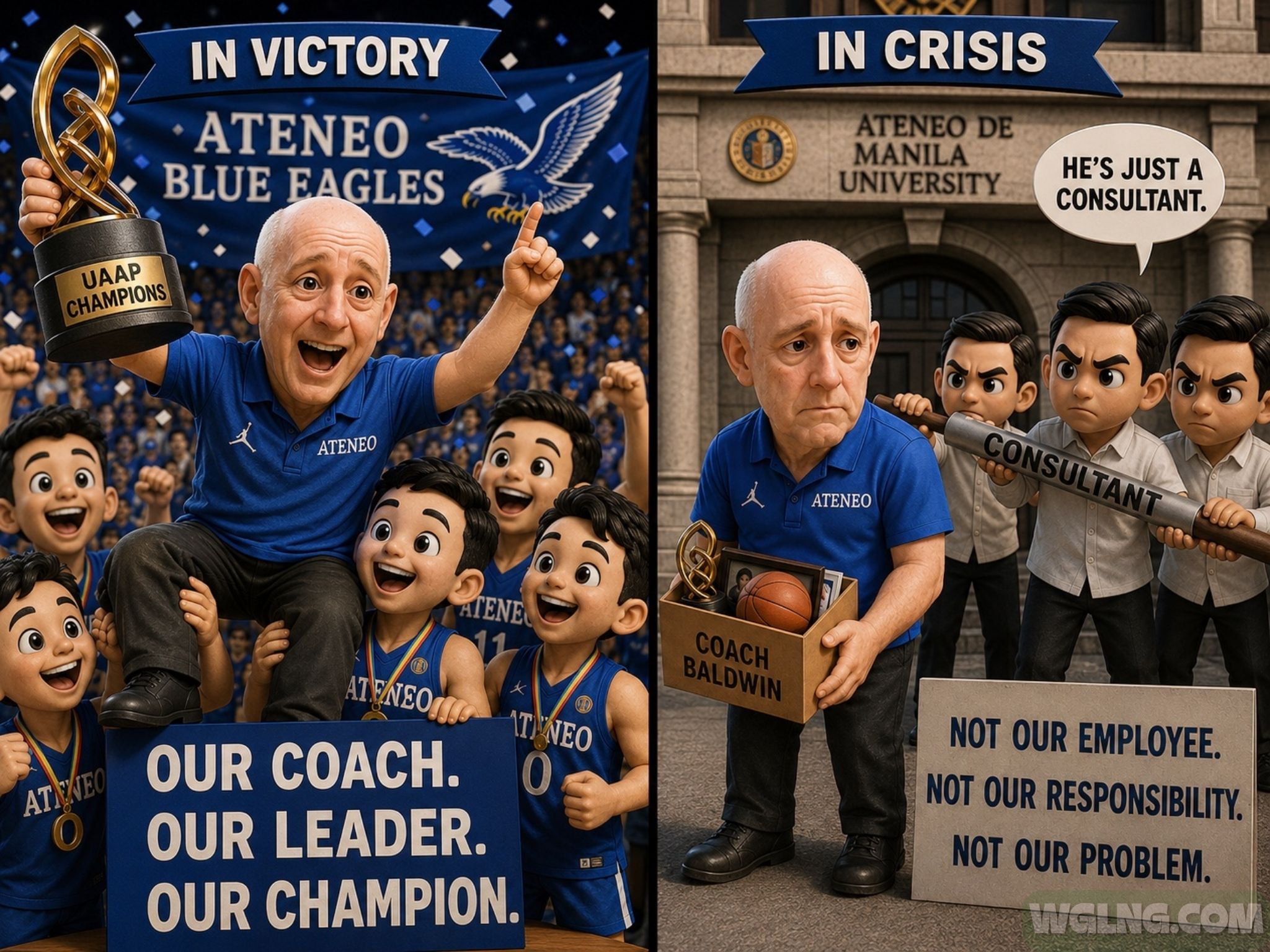
Baldwin was Ateneo enough to win trophies for the school, but apparently not Ateneo enough for the institution to acknowledge when consequences arrived.

The Philippine elite have perfected a particularly repulsive habit: they claim every triumph as their own, then suddenly discover legal technicalities when accountability comes knocking.

Ateneo’s treatment of Tab Baldwin appears to follow that familiar elite playbook. During the championship years, he was never presented as some distant “consultant.” The university publicly embraced him as its head coach, credited him with building the basketball program, praised his role in its success, renewed his contract with institutional fanfare, and celebrated the titles won under his leadership. His achievements were woven into the Ateneo identity whenever they enhanced the school’s prestige.

Now that serious questions are being raised, Ateneo would have the public believe that he was merely an outside contractor—useful enough to glorify, but apparently not close enough to acknowledge when responsibility becomes inconvenient.

That is not moral leadership. It is institutional cowardice dressed in legal language.

For ordinary Filipinos like me, this spectacle is painfully recognizable. The privileged collect the trophies, the influence, and the money. The poor collect the consequences. When lives are lost, the powerful summon lawyers, redefine relationships, and wash their hands with carefully chosen words.

The hypocrisy becomes even more offensive because Ateneo markets itself as a Catholic institution supposedly guided by compassion, justice, and service. But what is the value of those teachings when they disappear at the first threat of liability? Faith becomes nothing more than branding when mercy is preached in classrooms but accountability is avoided in boardrooms.

It is difficult not to ask whether the response would have been different had the victims carried surnames associated with wealth, influence, or political power. Perhaps then there would have been less semantic gymnastics and more urgency.

I expected better from Ateneo. That may have been my mistake. Beneath the polished language of excellence and social justice lies the same elite instinct that has poisoned Philippine society for generations: protect the institution, preserve the prestige, and let those with less power bear the cost.


Categories Institutional Rot, Oligarchic Theater

Genuine recognition is one thing; political self-insertion into an athlete’s triumph is another.

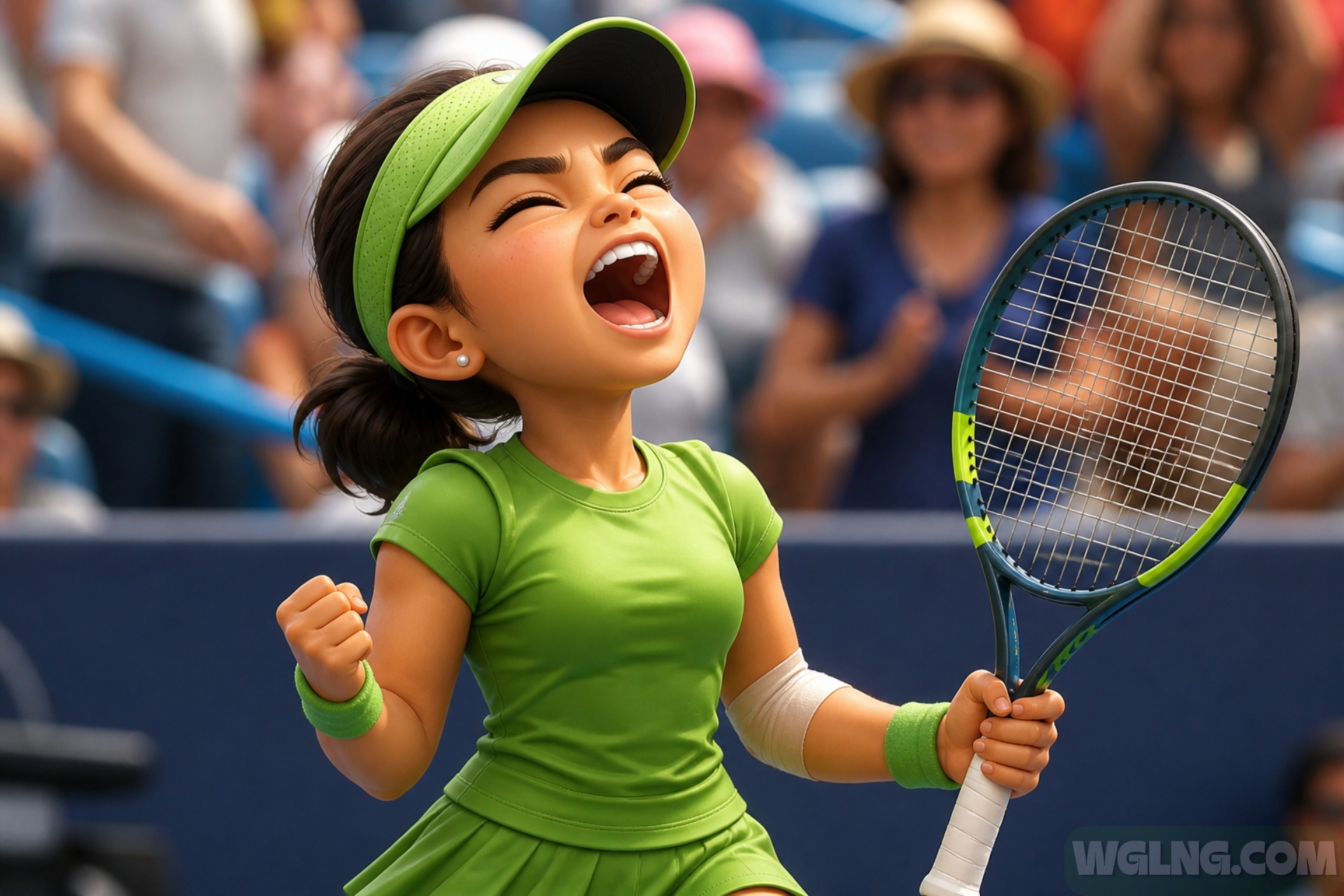
The Alex Eala bandwagon has officially left the station, and, right on schedule, some political passengers are climbing aboard with press releases in hand.

Every Filipino sporting breakthrough now seems to come with a predictable side event: a sudden burst of official affection for the athlete, the sport, the youth, the flag, and whatever else can fit into a congratulatory statement. The athlete trains for years. The politician drafts a tribute, files a resolution, or posts praise after the victory is already public. Somehow, both are expected to share the glow.

This is not statesmanship. At its worst, it is basking in reflected glory with better lighting.

Eala does not deserve becoming another backdrop for political grandstanding. She won the matches. She carried the pressure. She did the work. Some politicians, meanwhile, appear only after the victory, claim emotional proximity, and call it public service.

In the Philippines, when public praise turns into self-insertion, the word is hard to avoid: epal.

If these officials truly care about tennis, youth development, and Filipino athletes, they can start somewhere less glamorous than the victory parade. Fund courts. Support coaches. Build programs. Fix the systems that leave athletes scrambling for private resources, family sacrifice, and foreign training just to compete. If they helped build that path, they should show the record. If not, the applause is cheap.

My conjecture is simple: the timing, repetition, and low political cost make this sudden affection look politically convenient. Alex Eala is admired, nonpartisan, inspiring, and safe to praise. Attaching themselves to her moment lets politicians look patriotic without solving anything, supportive without spending much, and visionary without having built a path for anyone to follow.

Eala earned the spotlight.

The epals should stop blocking the view.


Categories Everyday Absurdity, Procedural Farce

After countless dead ends, one unexpected email from Instagram Security finally brought my old account back.

I got my original Instagram account back.

That is a sentence I did not expect to write anymore.

Out of nowhere, I received an email from Instagram Security with a recovery code. It was not a reply to any recent support request. It was not something I triggered. It just arrived.

And somehow, this time, it worked. After nearly two years of being unable to log in, I was back inside the account almost too easily. No maze. No dead end. No vague error message. Just a code that finally did what recovery codes are supposed to do.

The funny thing is, now that I have the account back, I am not even sure what to do with it. I had already given up on it. I had already started publishing photos here on the website. At some point, I stopped thinking of Instagram as something I needed to recover and started treating it as something I had lost.

So now what? Start over? Clean it up? Leave it alone? Use it only to point people back here? I do not know yet.

But make no mistake: I am glad to have control of the account again. I do not know if someone from Instagram support saw my post and quietly pushed the right button. I do not know if this was just some delayed automated recovery process finally working after all this time. (I mean, they locked me out!)

I will probably never know. For now, I am just glad the account is mine again.


Categories Captured Systems, Maker Notes