
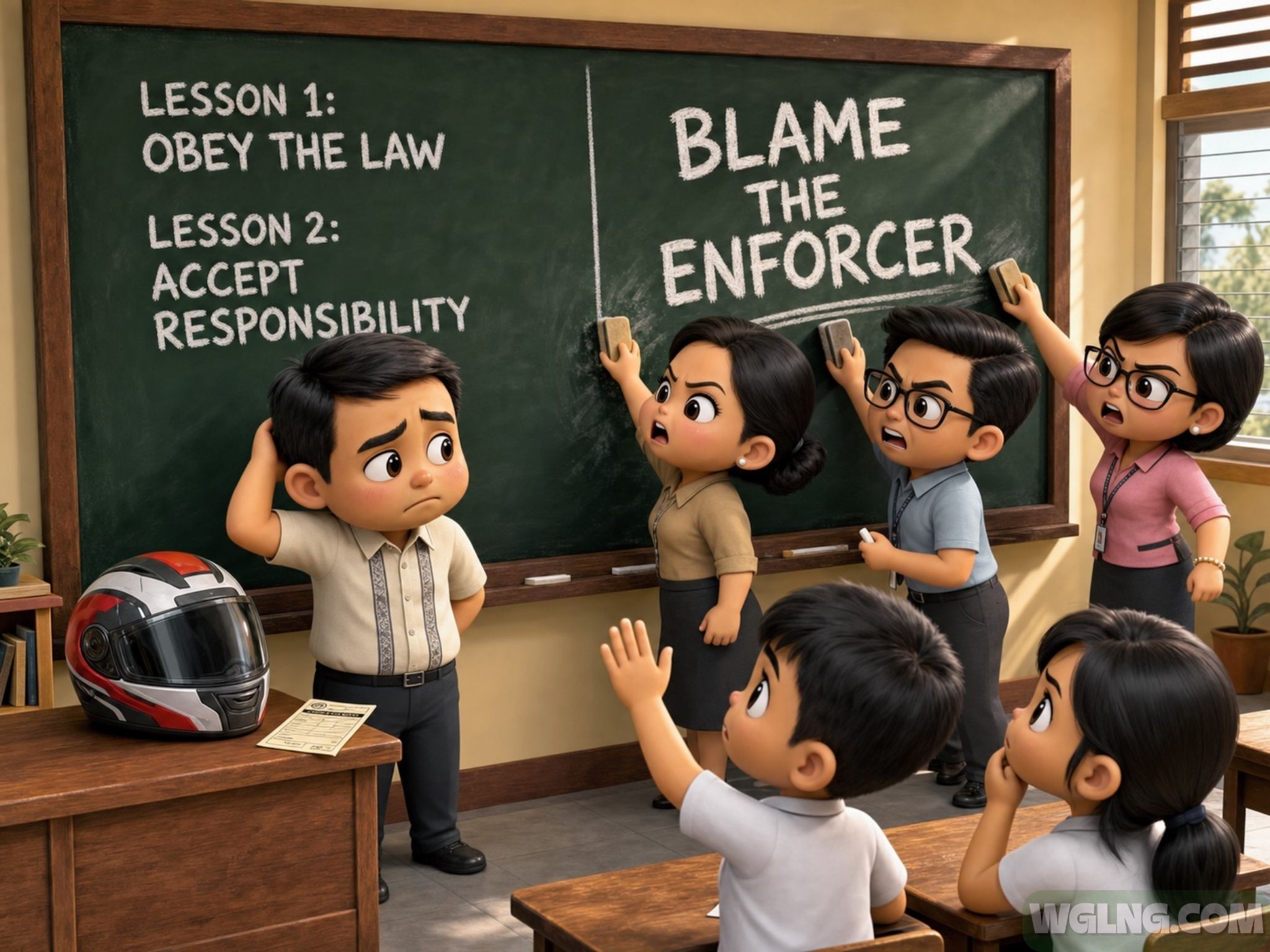
An MMDA road-clearing operation recently caught a public-school teacher riding a motorcycle without a helmet. He was stopped, questioned by Special Operations Group chief Gabriel Go, and issued a citation. Go reminded him that teachers are expected to set an example for their students. Despite the teacher’s request that the encounter not be uploaded, a video with his face blurred was subsequently posted online.
Teacher organizations immediately entered the controversy. They accused Go of humiliating the teacher, questioned the publication of apprehension videos, and demanded action against the MMDA official.
There is a legitimate question about whether government operations should become material for an official’s personal social-media account. But where were these groups when Go used the same method against ordinary motorists and other violators?
They found their voices only when the person apprehended happened to be one of their own.
That selective outrage destroys much of their credibility. If recording and publishing traffic apprehensions are inherently degrading, teacher organizations should have opposed the practice consistently—not merely when a colleague was caught violating the law.
Worse, their vigorous defense made it appear that the teacher’s profession entitled him to softer treatment. They may concede that he deserved the ticket, but their overwhelming emphasis on his embarrassment effectively turned the offender into the victim.
Teachers should be role models for compliance, not a fraternity that closes ranks when one of its members is held accountable. The correct response was simple: acknowledge without qualification that their colleague broke the law, require him to accept the consequences, and remind all educators that the respect accorded their profession carries corresponding responsibilities.
The Philippines is already suffering from a grave learning crisis. Filipino students remain among the world’s weakest performers in reading, mathematics, and science. At such a time, teacher organizations should be concentrating on classroom competence, professional standards, and the deteriorating quality of education—not spending their institutional energy shielding an erring colleague from the discomfort caused by his own actions.
Our teachers demand respect because they shape the youth. Then they must earn that respect through example.
Teach children to obey the law. Demonstrate accountability when caught doing wrong. Improve educational outcomes. And stop behaving as though professional dignity means protection from criticism.
No helmet, no ride. No profession is exempt.