
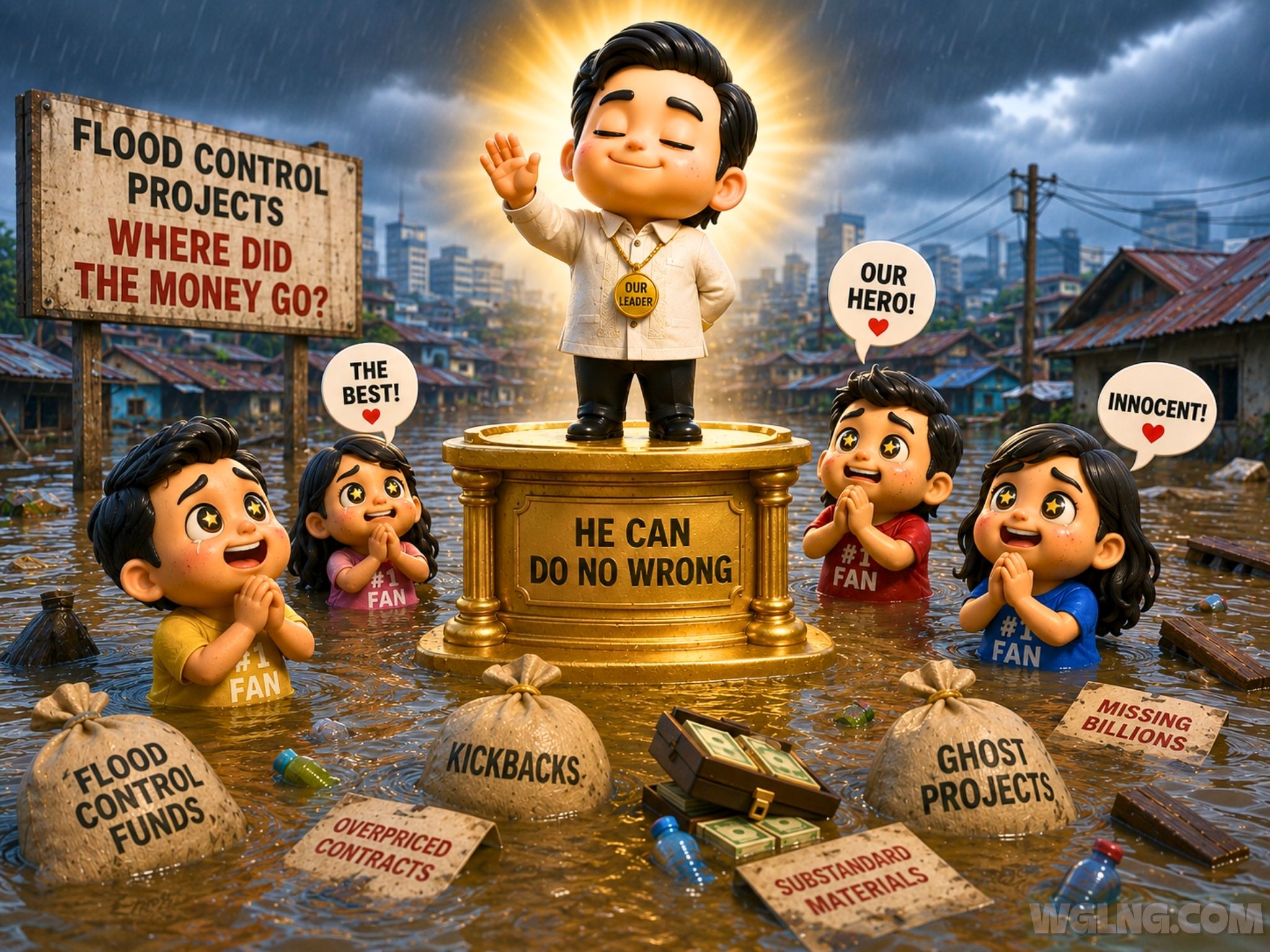
From the outside, one of the strangest things to watch is how easily principles turn into props. You see someone rail against corruption, abuse, incompetence; the whole vocabulary of righteous anger; and you think, good, they mean it! Then the name changes. Same offense. Different side. And suddenly, that fire cools into something more careful. More conditional. You can almost see the gears turning, searching for an exit ramp from their own moral stand.
I’ve watched it happen around the flood control disaster. Citizens, furious; and rightly so; demand investigations, jail time, public humiliation for politicians who pocketed funds, signed off on ghost projects, left people to drown because infrastructure was built on graft. The outrage is real. You can hear it in their voices. They want heads to roll! Fair enough.
But then the same kind of allegation surfaces about a politician they actually like. Someone they’ve defended before. Maybe even voted for with genuine hope. And here’s where the human part gets uncomfortable. You see the same people now asking for “context.” They blame a subordinate. They say the evidence is incomplete. They insist their idol “could not have known.” Some don’t even bother with that; they just attack whoever brought it up.
And here’s the thing: they don’t seem to notice the shift. From the outside, though, it’s stark. One moment, a person of principle. The next, a fan wearing a crusader’s costume.
What’s tragic isn’t just the hypocrisy. It’s how well corruption understands this game. Politicians learn quickly that they don’t need to be clean. They just need a base loyal enough to look the other way. Because as long as accountability is something you reserve for the other side, nobody in power has to fear the public. They only have to fear losing their fans.
From where I sit, a serious person, not a perfect one, just a serious one, doesn’t ask “Which side is this?” before condemning corruption. They ask one question: Was the public betrayed?
If flood control money was stolen, wasted, or turned into a political slush fund, the outrage shouldn’t depend on party color, region, surname, or who makes you feel hopeful at rallies. Floods don’t check IDs. The people wading through the aftermath don’t care about your nuance. And the only excuse that matters is none at all.