
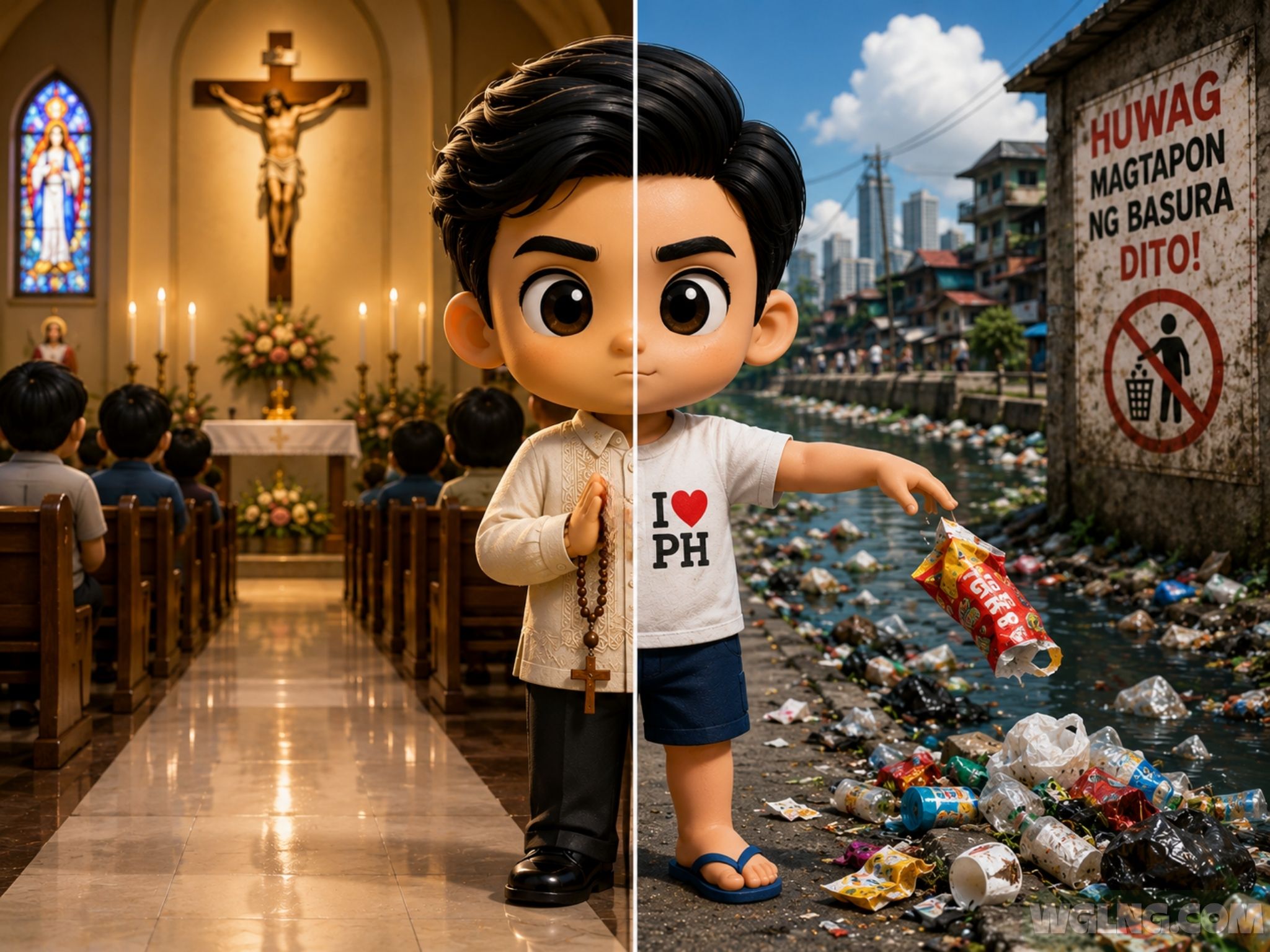
I am honestly tired of seeing the same story again and again: garbage in the river, garbage on the streets, garbage clogging drains, garbage floating where people are supposed to travel, breathe, live. The Pasig River Ferry Service had to be suspended because of a severe buildup of trash in the river, with the MMDA saying the garbage was damaging and disrupting ferry operations.
How much more embarrassing can this get?
We love to talk about education. We love to talk about values. We love to talk about being raised Catholic, being taught right from wrong, being “maka-Diyos,” being respectful, being decent. And yet somehow, after all those years of schooling, catechism, sermons, and moral lectures, too many Filipinos still cannot perform the most basic civic act: put trash where trash belongs.
That is what makes this so infuriating. This is not an advanced policy problem. This is not rocket science. This is not some abstract failure of governance alone. This is also personal behavior multiplied by millions. Someone finishes a drink and tosses the cup. Someone eats chips and drops the wrapper. Someone cleans a house and dumps waste outside. Someone sees a canal, a creek, a river, and treats it like a free garbage chute.
And then we all act shocked when the flood comes, when the stench rises, when transport stops, when cities look filthy, when rats and disease follow.
I am envious of countries where garbage is managed so well that you do not see trash strewn everywhere like part of the urban landscape. Their streets are not perfect because their people are angels. They are cleaner because rules are enforced, systems work, and citizens have internalized shame over littering. Here, too many people seem to feel no shame at all. The street is someone else’s problem. The river is someone else’s problem. The cleanup is someone else’s job.
So what would it take for Filipinos to learn?
Start with real consequences. Fine litterers. Enforce barangay rules. Make illegal dumping punishable. Stop treating garbage discipline as a “campaign” and start treating it as a daily obligation.
Teach children early, but do not stop with children. Adults are the ones making the mess now. Make communities responsible for their own surroundings. Shame habitual dumpers, not the people pointing out the filth.
And above all, stop pretending this is just about poverty. Poverty does not force someone to throw a plastic cup into a river. Rich people also throw their trash everywhere. Like when they throw their coffee cups out of their car windows wherever they are. That is neglect. That is entitlement. That is a broken civic culture.
What will it take? Maybe discomfort. Maybe penalties. Maybe public shame. Maybe all of it.
Because clearly, polite reminders are not enough.