When Sovereignty Depends on the Accused

Let me be honest. I’m no legal expert. I don’t speak in ICC statutes or sovereign immunity clauses. But I’ve been watching what’s happening with Rodrigo Duterte and now Senator Bato Dela Rosa, and something doesn’t sit right.

This isn’t really about the drug war anymore, or even about the International Criminal Court. To me, it feels like we’re being tested on whether we actually believe in anything—or whether we just pick whichever argument helps us win the fight of the day.

For years, people who hated Duterte said the same thing: we need the ICC because our own courts won’t do the job. They said Philippine justice is too weak, too scared, too compromised to go after someone like him. So The Hague becomes the only option. That’s the argument. Clean, simple, easy to remember.

But here’s where I get confused.

A lot of those same people—the ones cheering Duterte being sent to The Hague—I wonder if they’d keep that same energy if the ICC went after their own political heroes. Suddenly, I bet sovereignty wouldn’t sound like a dirty word anymore. Suddenly, Philippine courts would matter. Due process would be sacred. The very same people who said “our justice system is a joke” would start talking about national dignity the second their favorite leader was in the crosshairs.

That doesn’t sound like principle to me. That sounds like picking whatever court hurts your enemy and protects your friend.

When Duterte was handed over to the ICC, his enemies called it accountability. Finally, no one is above the law. But his supporters saw something else: our own government—with its own Constitution, its own courts, its own Congress, its own Supreme Court—cooperating with a foreign court to go after a former president. That stings, whether you like Duterte or not.

Now Bato Dela Rosa is in the spotlight. He was Duterte’s police chief during the drug war, and now he’s a sitting senator. And here’s where the contradiction gets really sharp.

If we truly believe the Philippines is a sovereign country with a working justice system, then Bato should be tried here, not abroad. Full stop. But if we believe our courts are useless—but only when it comes to people we don’t like—then sovereignty becomes conditional. It only exists when we need it as a shield.

That’s dangerous, isn’t it?

Because a court system can’t be respected only when it gives us the verdict we want. Either we think Philippine courts can go after powerful people, or we don’t. Either the ICC is a legitimate backstop when our own system fails, or it’s foreign interference. What we can’t do—honestly, at least—is flip-flop depending on whose neck is on the line.

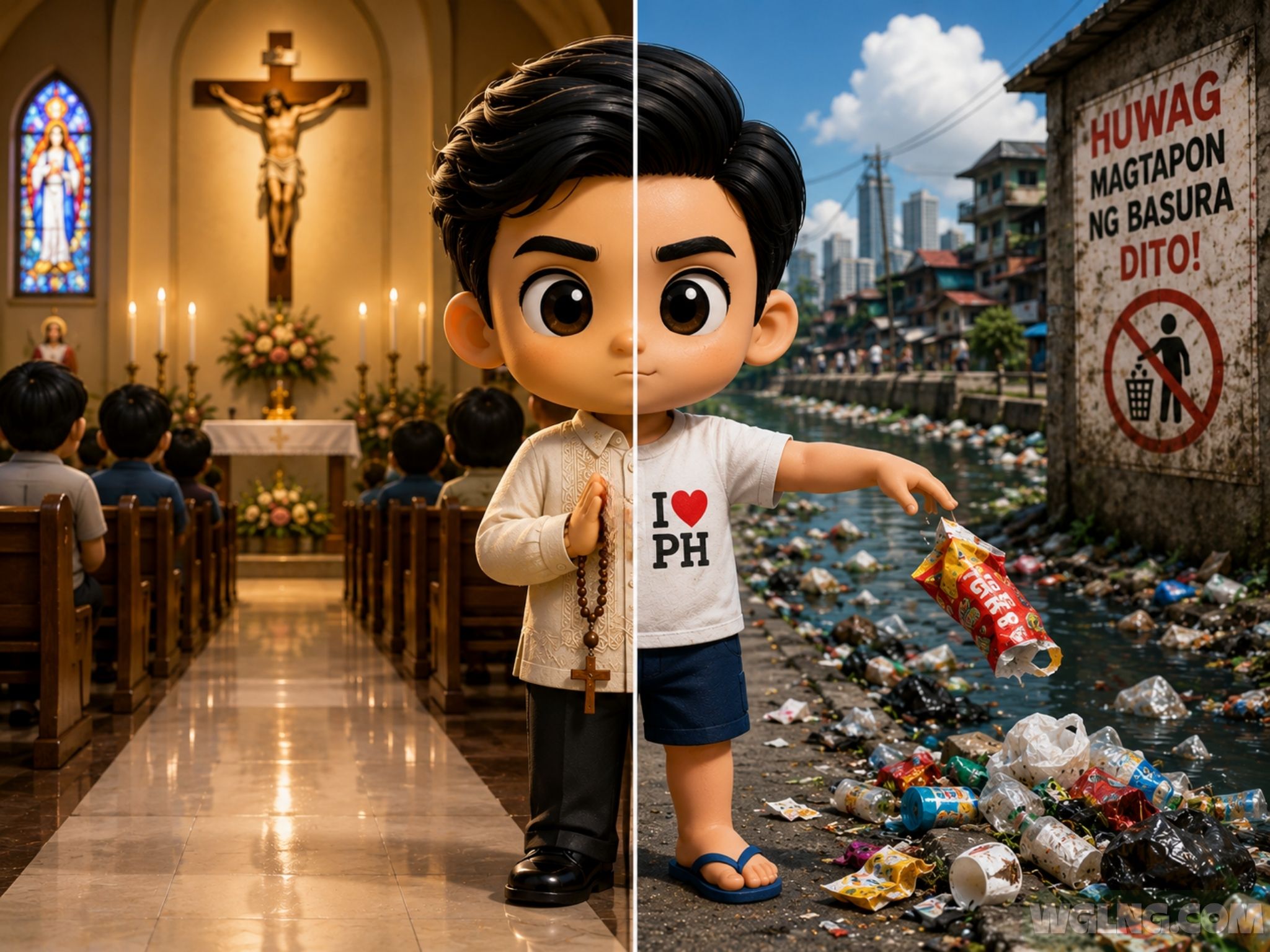
That’s why I’ve started calling this “jurisdictional opportunism.” It’s people who are Hague-first when the accused is their enemy, but Philippines-first when the accused is their idol. They don’t really stand for the rule of law, or sovereignty, or human rights as fixed ideas. They just stand for winning.

Now, let me be fair. There are sincere people who support the ICC because they genuinely believe the victims of the drug war will never get justice here. That’s a real position, and it deserves to be heard.

But there are also people who just use “international justice” as a weapon. For them, the ICC isn’t about the rule of law. It’s about finding the most convenient court to punish the other side.

What the Duterte and Bato cases really show, I think, is a deeper sickness in our politics. Principles get treated like costumes. Sovereignty is worn when it protects your allies. International accountability is worn when it punishes your enemies. Due process is holy when it helps you, and a joke when it gets in your way.

That’s not justice.

That’s just politics dressed up in a judge’s robe.


Categories Partisan Hypocrisy, Selective Justice

Ordinary Filipinos deserve answers about stolen public funds, not another elite power struggle dressed up as accountability.

There is something deeply revealing about how quickly political institutions can move when the target is useful.

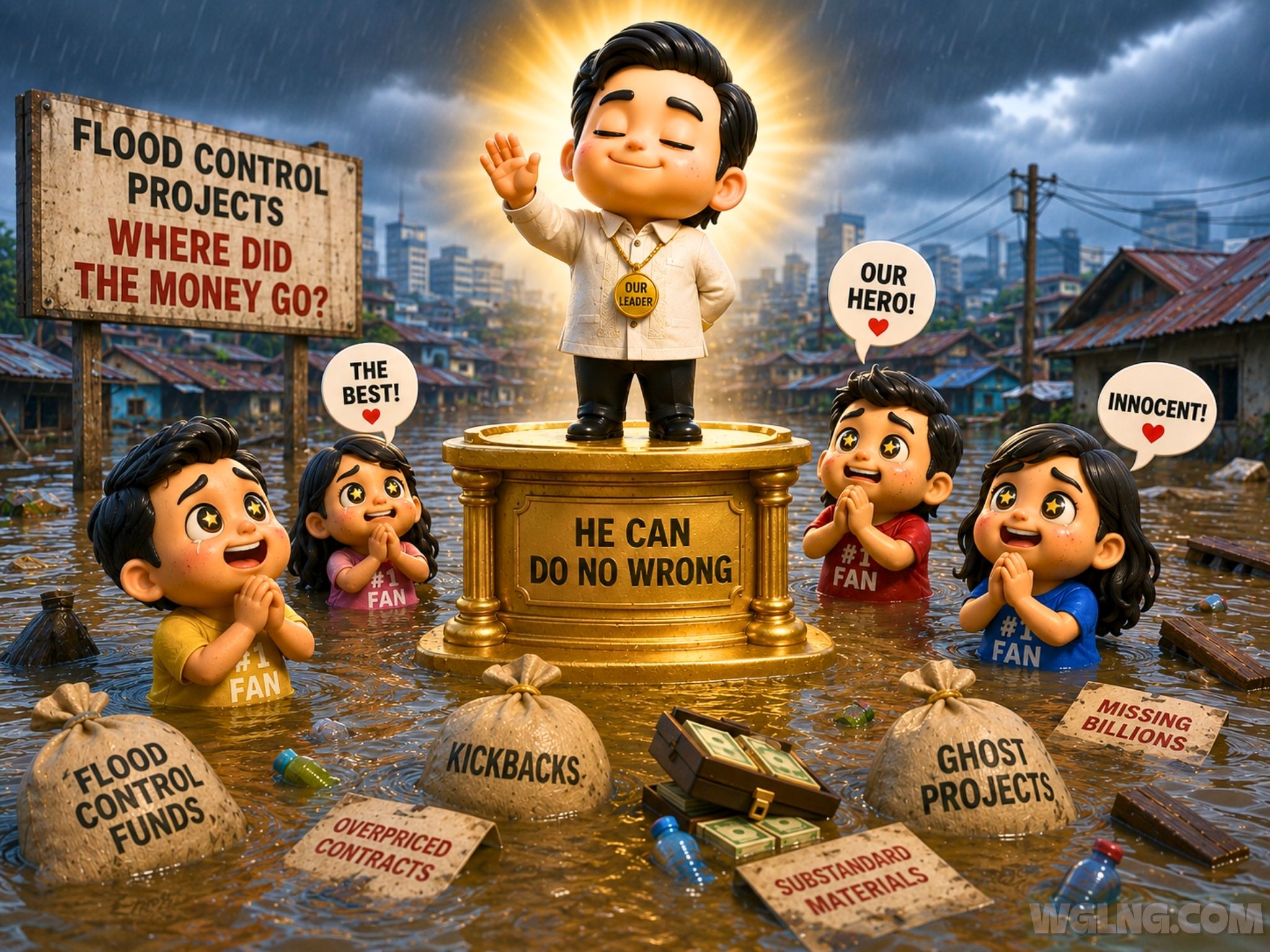
For months, the Philippines has been gripped by the flood-control corruption scandal: billions in public funds, questionable infrastructure projects, allegations of ghost or substandard work, and the familiar stench of public money being siphoned away while ordinary Filipinos are left to suffer the consequences. This is not an abstract scandal. Flood control is not a luxury project. It is supposed to protect homes, roads, schools, livelihoods, and lives.

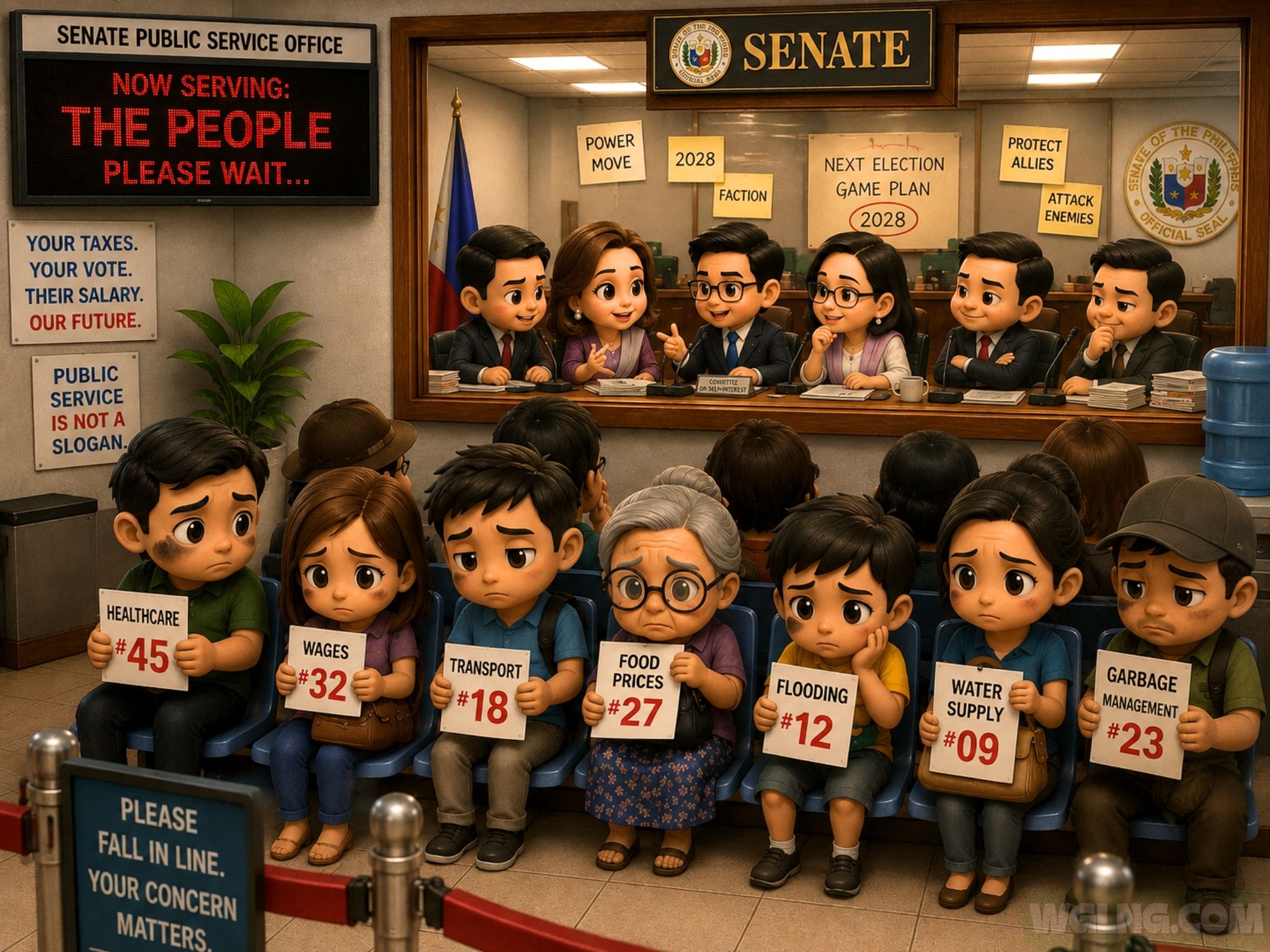
And yet, just as the public was beginning to demand answers about who benefited, who approved the projects, who inserted the funds, who signed the contracts, and who protected the network, Congress seems to have discovered a new object of intense urgency: the impeachment of Vice President Sara Duterte.

That shift says a lot.

It says that Congress can move fast when it wants to. It says lawmakers can find discipline, numbers, coordination, and political will when the issue is a high-stakes power struggle. It says the machinery of government is not slow by nature. It is slow only when the victims are ordinary Filipinos and the suspects may include too many well-connected names.

The flood-control scandal should have been a moment of national reckoning. It should have forced a serious examination of how infrastructure funds are planned, inserted, awarded, inspected, and liquidated. It should have led to a relentless pursuit not only of engineers and regional officials, but of contractors, political patrons, budget sponsors, and lawmakers who may have had a hand in turning disaster-prevention projects into private income streams.

Instead, the energy appears to have shifted.

And the shift is difficult to ignore.

Sara Duterte’s impeachment may involve serious allegations. No public official, including the vice president, should be placed beyond accountability. If public funds were misused, if threats were made, if constitutional violations occurred, then those accusations deserve to be examined through the proper legal and constitutional process. This is not about defending Sara Duterte. It is not about excusing her. It is not about choosing one political dynasty over another.

The point is simpler than that: corruption should be pursued no matter who committed it.

That is exactly why Congress’s sudden intensity looks so selective.

If lawmakers can summon overwhelming force to pursue impeachment because it may stop Sara Duterte’s planned presidential run in 2028, then why can they not summon the same force to expose everyone involved in the flood-control mess? Why is there no comparable urgency to identify the full chain of responsibility behind projects that may have robbed communities of protection from flooding? Why does the system seem more determined to neutralize one political threat than to dismantle a corruption pipeline?

The answer may be uncomfortable, but it is not surprising.

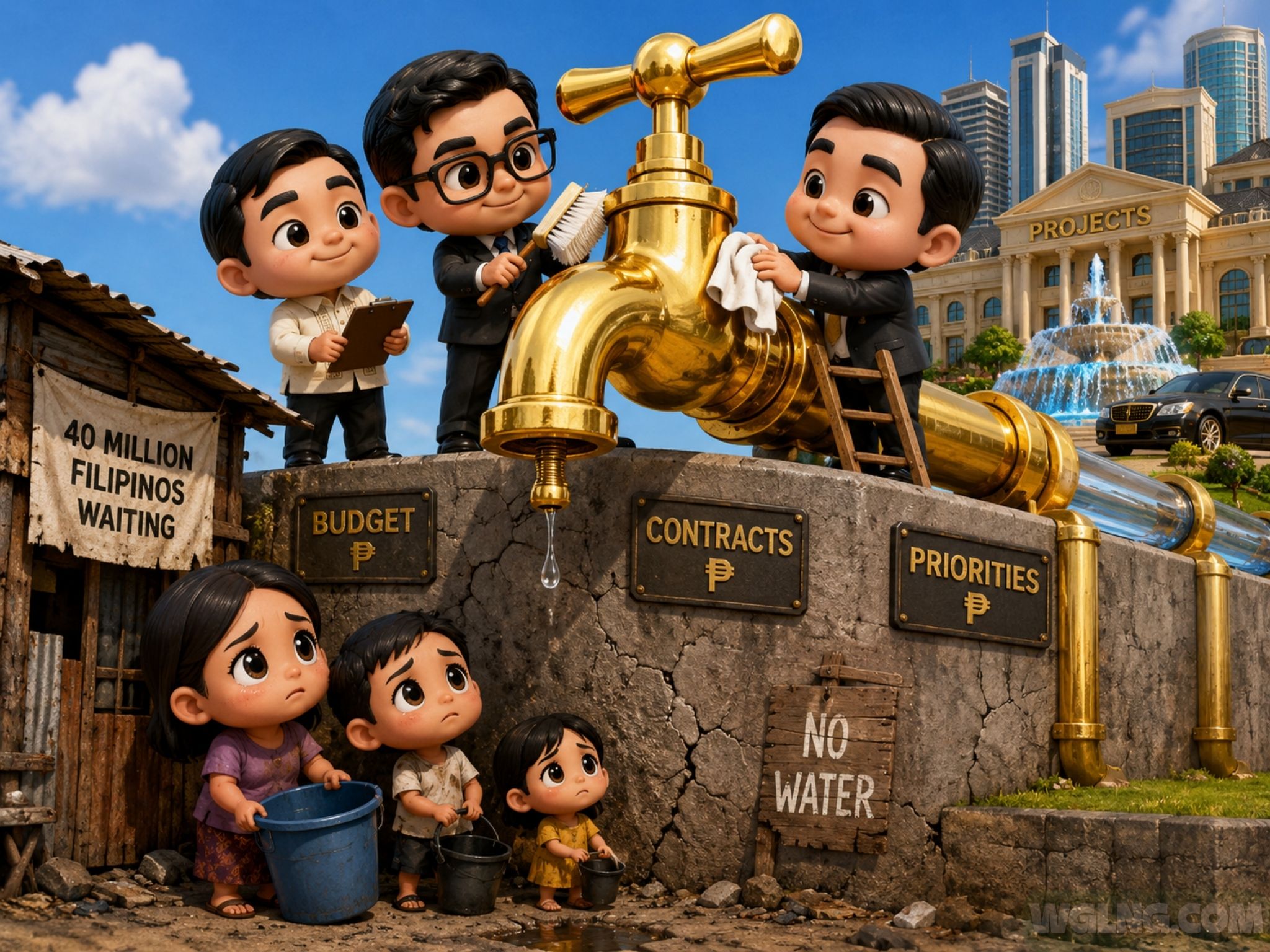
Congress is not merely a lawmaking body. It is also a fortress of political interests. Many of its members belong to the same ecosystem that benefits from the status quo: dynasties, patronage networks, budget insertions, favored contractors, transactional alliances, and election-time calculations. In that world, corruption is not always treated as a moral emergency. Sometimes, it is treated as a management problem. A scandal becomes dangerous only when it threatens the wrong people, at the wrong time, in the wrong political configuration.

That is the double standard.

When corruption is diffuse, systemic, and potentially implicates a broad network of insiders, the process becomes slow, technical, fragmented, and buried in hearings. But when the target is a political rival whose removal could reshape the 2028 presidential race, suddenly Congress becomes focused. Suddenly the numbers are there. Suddenly the moral language becomes loud.

This is why many Filipinos are cynical.

They have seen this pattern before. Accountability is invoked not as a consistent principle, but as a weapon. Corruption is condemned, but often selectively. Public outrage is welcomed when it can be steered toward a convenient enemy, but it becomes inconvenient when it points toward the deeper machinery that keeps the same political class in power.

That machinery is the real problem.

The flood-control scandal is not just about broken projects. It is about a broken order. It is about a political culture where public works can become private opportunity, where oversight often arrives only after the damage is done, and where accountability stops at a manageable level before it reaches the truly powerful.

If Congress is serious about corruption, then the test is obvious: pursue both.

Pursue Sara Duterte if the evidence warrants it. But pursue the flood-control scandal with the same fury. Follow the money. Name the contractors. Expose the budget sponsors. Investigate the lawmakers. Audit the projects. Prosecute the fixers. Jail the guilty, whether they are engineers, mayors, representatives, senators, Cabinet officials, allies, enemies, or donors.

Anything less is political theater.

The Filipino people do not need Congress to prove that it can destroy a political rival. They already know politicians are good at that. What they need is proof that Congress can confront corruption even when doing so threatens its own comfort, allies, and financial networks.

Right now, the message is grim.

Congress appears more animated by the need to manage the 2028 presidential battlefield than by the need to confront a corruption scandal that directly harmed the public. It appears more committed to preserving the political order than to cleaning it. It appears more interested in deciding who gets to inherit power than in asking who stole from the people.

That is not accountability.

That is the status quo defending itself.


Categories Oligarchic Theater, Partisan Hypocrisy

A small meditation on café etiquette, missing headphones, and the people who believe silence is optional.
A short take on café etiquette, missing headphones, and the people who believe silence is optional.

At a coffee shop yesterday, while having “breakfast” with my wife, a man sat at one of the tables near us and proceeded to watch videos on his phone at full volume. You could tell he was either on TikTok or Facebook, and he had absolutely no headphones of any kind; because apparently, the rest of the café had been waiting all morning to hear whatever social media decided to feed him.

The man was probably in his 60s or thereabouts, yet somehow appeared to have missed the part of life where people learn basic public decorum. Perhaps he skipped his GMRC classes as a child. Perhaps he ate the textbook. Whatever happened, the results were on full display in what was supposed to be a quiet café.

We were already somewhat close to finishing our meal, so I decided not to gently remind this rotten soul that other people exist. There was also the small but not entirely irrational fear that a man audacious enough to behave like that in public might also be capable of murder. I could have ended up being unalived right there, all because I dared to defend the sacred silence of overpriced coffee.

There really should be laws against watching videos on mobile devices in public with the volume turned up as if you’re alone in your living room. But while we’re at it, there should probably also be laws against sheer stupidity, brazen apathy, and the kind of confidence that makes people think an entire café needs to participate in their screen time.


Categories Everyday Frictions, Public Nuisance Studies

In a country shaped by corruption scandals, skepticism toward the Lotto no longer feels irrational.

Whenever people start talking about the Philippine Lotto being “rigged,” a part of me still wants to dismiss it as ordinary Filipino paranoia. We’ve always been a nation of conspiracy theories. We speculate about everything—from celebrities and politicians to basketball games and beauty pageants.

But lately, I’ve started wondering if the growing suspicion surrounding the Lotto is really that unreasonable.

Because honestly, some of these results are becoming harder and harder to simply shrug off.

Take the recent May 5 draws. All three major lotto games reportedly produced jackpot winners in the same evening, including an eye-popping 10 winners for the Ultra Lotto 6/58. Technically speaking, I know that improbable things happen. Somebody eventually wins. That’s the whole point of lotteries. But when you live in a country like the Philippines—where corruption has touched almost every institution imaginable—you can’t blame ordinary citizens for occasionally looking at these outcomes sideways.

The problem is that trust in the system was already damaged years ago.

People seem to forget that in 2019, then-President Rodrigo Duterte himself temporarily suspended PCSO gaming operations because of alleged “massive corruption” inside the agency. That happened. It wasn’t invented by internet trolls or YouTube conspiracy channels. When something like that becomes part of an institution’s history, public doubt doesn’t simply disappear because officials later say everything is fine again.

And so now, every unusual Lotto result immediately triggers suspicion.

Personally, I don’t claim to know whether the Lotto is rigged or not. I don’t have secret documents. I don’t know insiders. But I do think the public deserves better answers than simply being told, “Trust us, it’s random.”

Because if the system is truly clean, then transparency should not be a problem.

Why not fully explain how the draws are conducted in ways ordinary people can actually understand? Why not release more detailed independent audit reports? Why not show whether these multiple winners came from scattered locations or from strangely connected circumstances? Why not give the public more visibility into how the machines, balls, and verification systems are handled before and after every draw?

Those are not attacks. Those are normal questions from citizens whose trust has been eroded over decades—not just by the PCSO, but by countless scandals involving public institutions across the country.

That’s really the bigger issue here: the Lotto is no longer just about luck. It has become tangled with the larger Filipino feeling that powerful systems often operate beyond public scrutiny. Once people begin carrying that mindset, even statistically possible events start looking suspicious.

And honestly, can we really blame them?

At this point, I think what many Filipinos want is not outrage, drama, or viral conspiracy theories. What they want is reassurance. Real reassurance. The kind built not on press statements, but on openness.

Because if the Lotto is truly fair, then the PCSO should lead the way in making the process as transparent as humanly possible. Not because the public is entitled. But because public trust, once damaged, has to be earned back—not demanded.


Categories Civic Exhaustion, Institutional Rot

When a burger mistake looks too obvious.

Last Sunday, close to high noon, I was lining up to order food at McDonald’s Greenhills when a customer came barging back to the counter to complain. He was holding up his Quarter Pounder order and telling the counter staff that the kitchen had given him the smaller patty used for regular burgers.

He was clearly furious at the staff, though he remained apologetic to the people waiting in line.

The counter staff examined the burger, and from where I was standing; there was just one person ahead of me in my queue; the complaint looked valid. The patty was visibly small. It did not look like the Quarter Pounder he had ordered. After a few minutes, the issue was corrected, and he was given the right patty for his sandwich.

As it happened, I was planning to order a Quarter Pounder myself. So after giving my order, I added a small reminder to the cashier: “Please make sure your kitchen people give me the right patty for my burger.”

The staff chuckled and replied, “Yes, sir!”

When my order arrived, I watched as they assembled it on the countertop. I noticed that the person who took my order made sure that I was getting the correct beef patty. Kudos to him! And from where I was standing, I could see that the kitchen got it right.

That made me wonder: was the earlier mistake really just a mistake?

How does someone miss the patty size when the order is right there before assembly? How does the staff correctly pick the box labeled “Quarter Pounder,” place the sandwich inside it, and still fail to notice that the burger itself has the wrong patty?

Maybe it was carelessness. Maybe it was a lapse during a busy lunch hour. But from a customer’s point of view, it is hard not to wonder how such an obvious mismatch made it all the way to the counter.


Categories Consumer Disenchantment, Everyday Frictions