The Philippines refuses to save its poor: A society built on cheap labor, selective morality, and elite comfort will never rescue the people it was designed to exploit.

There is a cruel rhythm to Philippine society, and it has played for so long that many have mistaken it for normal life.

Every election season, the poor are discovered again. They become statistics, campaign backdrops, slogans, song-and-dance beneficiaries, proof that a candidate “understands the people.” Their hands are shaken, their children are kissed, their neighborhoods are entered by cameras and convoys. Then the votes are counted, the lights are packed away, and the same people return to the same lives: underpaid, overworked, underprotected, overpoliced, and endlessly lectured by people who have never had to choose between food, rent, medicine, and school expenses.

The ugly truth is that Philippine society has never been seriously designed to uplift the masses. It has been designed to manage them.

Piety as Costume

This is especially grotesque in a country that wears Catholic piety so proudly. The language of compassion is everywhere. Politicians attend Mass, quote Scripture, kiss religious icons, pose with bishops, and invoke God as if public virtue can be performed by merely being photographed in church. But the same society that kneels so visibly before altars often stands coldly before the suffering of the poor.

Religion, in this arrangement, does not soften power. Too often, it decorates it.

The problem is not faith itself. The problem is the way public piety becomes a costume for people whose actions are anything but "Christian". Some of the greediest, most ruthless, and most self-protective figures in society know exactly how to look devout. They know when to bow their heads, when to release a prayerful statement, when to appear at the right cathedral, and when to speak of mercy in public while defending systems that deny mercy to millions.

That is what makes the hypocrisy more sinister. Cruelty without religion is already ugly. Cruelty wrapped in piety becomes obscene.

Media Managing the Masses

The poor are needed as workers, consumers, voters, servants, drivers, guards, clerks, call center agents, riders, helpers, and warm bodies in political rallies. But they are rarely treated as citizens whose welfare should be the organizing principle of government. In theory, democracy gives them power. In practice, the country’s political and economic machinery is built to make sure that power is diluted, redirected, or bought back at the cheapest possible price.

And standing guard over this arrangement is a media ecosystem largely shaped by the interests, worldview, and social anxieties of the comfortable classes.

Whenever a political figure even appears to speak directly to the frustrations of the poor, the machinery starts humming. The candidate is not examined merely on competence or policy. He or she is processed through a moral filter controlled by people who already benefit from the current order. The poor may see someone who speaks their language, recognizes their anger, and promises disruption. The establishment often sees a threat to etiquette, investment confidence, elite consensus, and the polite illusion that the system only needs minor reforms.

So the candidate is flattened into a caricature. Crude. Dangerous. Uneducated. Populist. Dictatorial. Embarrassing. Unfit for polite society.

This does not mean every so-called champion of the poor is sincere. Many are frauds. Some exploit mass resentment for personal power. But it is striking how quickly elite opinion mobilizes against anyone who threatens to disturb the old hierarchy, while remaining remarkably patient with those who preserve it with better manners, cleaner English, and a more acceptable churchgoing face.

The media’s power is not simply in what it reports. It is in what it chooses to emphasize, what it minimizes, whom it humanizes, whom it mocks, and whose suffering is treated as urgent. A stock market tremor can become a national emergency. A business owner’s complaint can become a policy discussion. But the daily humiliation of workers, commuters, contractual employees, informal settlers, and minimum-wage earners is treated as background noise.

Selective Morality and the Drug Trade

The drug problem follows the same pattern of selective concern.

Public discussion often focuses on the poor communities where drugs are sold, used, and policed. That is where the cameras go. That is where the raids happen. That is where the mugshots come from. But everyone knows that illegal drugs do not move through society on the strength of street-level users alone. The trade survives because money protects it, demand sustains it, and influence shields it.

And yet the country rarely appears interested in asking uncomfortable questions about upper-class consumption, party circuits, private subdivisions, exclusive clubs, expensive schools, luxury nightlife, and the well-connected networks where illegal drugs can circulate with far less fear of consequence. The poor are treated as the face of the drug problem because they are easier to arrest, easier to shame, and easier to discard. The powerful, when implicated at all, are often treated as troubled individuals, victims of pressure, or names too delicate to say out loud.

This is another place where public morality becomes suspiciously selective. The same society that loudly condemns vice among the poor often becomes quiet, careful, and forgiving when the alleged vice belongs to someone rich enough, connected enough, or respectable enough to deserve discretion.

Cheap Labor, Holy Words

Then there is labor—the great national hypocrisy.

The Philippines loves to praise workers. It calls them heroes when they leave the country. It calls them resilient when they are underpaid. It calls them family when companies need loyalty. But when workers ask for wages that can actually sustain a family, regular employment, humane hours, benefits, security of tenure, and respect for labor laws, the praise suddenly becomes a lecture on competitiveness.

Businesses complain about costs. Managers complain about entitlement. Middle-class consumers complain when prices rise. Politicians make speeches about dignity. Executives talk about values. Owners thank God for blessings. And the worker is expected to absorb the sacrifice again.

It is not only the giant oligarchic firms that benefit from this culture. Smaller companies, subcontractors, agencies, family businesses, and middle-class entrepreneurs often reproduce the same abuses on a smaller scale. Delayed pay. Forced overtime. Fake “independent contractor” arrangements. Endless probation, a.k.a. the "5-5-5" scheme. No proper benefits. No real grievance process. Workers treated as disposable because there is always someone poorer, more desperate, and more afraid waiting outside.

The result is a country where the law exists beautifully on paper and weakly in practice. Labor rights become decorations. Minimum wages become survival jokes. Enforcement becomes negotiable. And dignity becomes something workers are told to earn after they have already given their health, time, and youth to employers who speak of “family culture” while cutting every possible corner.

This is why the masses remain trapped. Not because Filipinos are lazy. Not because the poor are ignorant. Not because they vote wrongly, as the comfortable classes love to say. They remain trapped because too many institutions are invested in keeping them there.

The oligarchy needs cheap labor. Politicians need dependent voters. Media needs narratives that do not offend ownership. Businesses need weak enforcement. The drug economy needs protected consumers and expendable fall guys. The middle class needs someone below them to blame, underpay, and feel superior to. And religion, instead of challenging this arrangement, is too often used to bless it, soften it, excuse it, or make its beneficiaries look morally upright.

So no, Philippine society will not suddenly wake up and look after the welfare of the masses. Not while the people who profit from the current arrangement are also the ones shaping the conversation, funding the campaigns, owning the platforms, influencing the laws, defining respectability, and occupying the front pews.

The poor are not forgotten.

They are remembered exactly when they are useful.


Categories Cultural Alienation, Oligarchic Theater

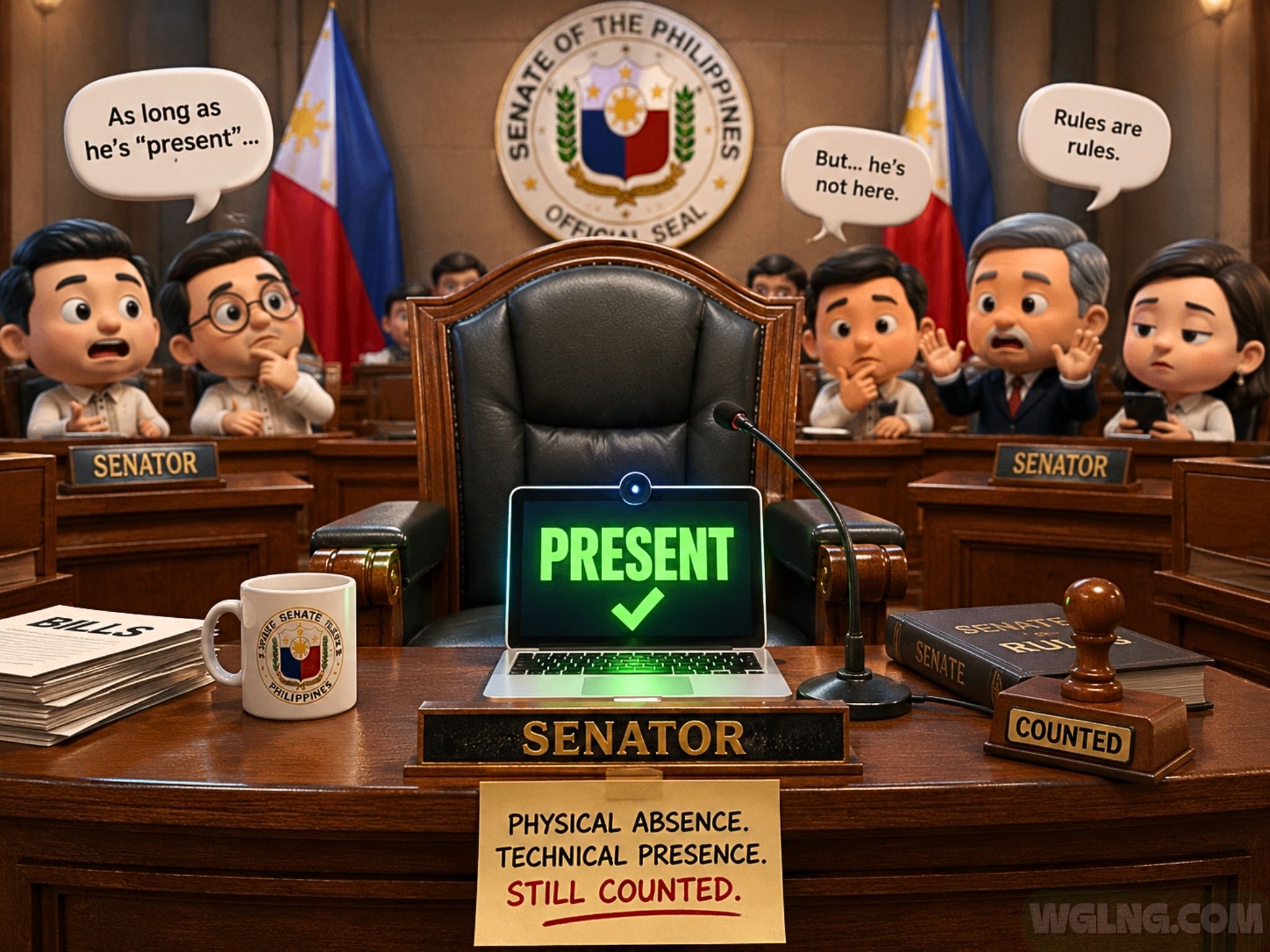
This is not rule of law. This is outsourcing punishment to a preferred foreign venue.

Of course, Philippine sovereignty must reign supreme — right up until it becomes inconvenient. Then, naturally, we must lovingly wrap it in a balikbayan box, slap an international postage label on it, and ship it to The Hague. After all, what is sovereignty if not something to invoke during speeches and quietly pawn off when your preferred foreign venue offers better odds against your political enemies?

This is the new high art of selective nationalism: demand that the Philippines stand tall, independent, and unbowed — except when the targets are those who were too hard on illegal drugs. Then suddenly, local courts are too slow, local laws are too messy, and local sovereignty is just a decorative slogan best printed on campaign posters. Why bother with the inconvenience of national institutions when you can simply outsource punishment to a court abroad and still call yourself a defender of the republic?

It is not really “rule of law” they are worshipping. It is rule of law with international delivery service — same moral outrage, faster foreign processing, and no need to admit that sovereignty only matters to them when it protects the right people.


Categories Partisan Hypocrisy, Selective Justice

The movie reportedly earned around $330.4 million in the U.S., $328 million internationally, for a worldwide total of roughly $658.4 million.
As of posting date, the movie reportedly earned around $330.4 million in the U.S., $328 million internationally, for a worldwide total of roughly $658.4 million.

I watched Project Hail Mary and came away genuinely liking it. On the surface, it is a science-fiction adventure about saving humanity from extinction. But what stayed with me was something much simpler and more hopeful: the idea that life from completely different worlds could eventually meet somewhere in the vastness of the universe and discover that they want the same thing — survival.

Ryland Grace and Rocky could not have been more different. Different biology, different worlds, different ways of communicating. Yet they ended up working toward a shared purpose: preserving their respective species. In a universe large enough to make everything feel insignificant, the film somehow landed on a surprisingly human idea — that cooperation can emerge even between beings separated by stars.

Maybe that is why I was also strangely glad to see the film succeed commercially. Science fiction can sometimes be dismissed as niche entertainment or spectacle-driven escapism, but Project Hail Mary managed to prove that audiences will still show up for stories built around curiosity, problem-solving, friendship, and hope.

As of posting time, the movie reportedly earned around $330.4 million in the U.S., $328 million internationally, for a worldwide total of roughly $658.4 million. Industry reports also placed its production cost below $200 million after tax credits, suggesting that the film not only found an audience, but likely turned into a financial success as well.

According to official all-time worldwide box office rankings, the movie currently sits at approximately #175 among the highest-grossing films ever released worldwide — an impressive position for a science-fiction film that did not rely on an existing superhero universe.

Perhaps there is something fitting about that. A story built around cooperation ended up finding cooperation from audiences as well.


Categories Cultural Alienation, The Entertainment Margins

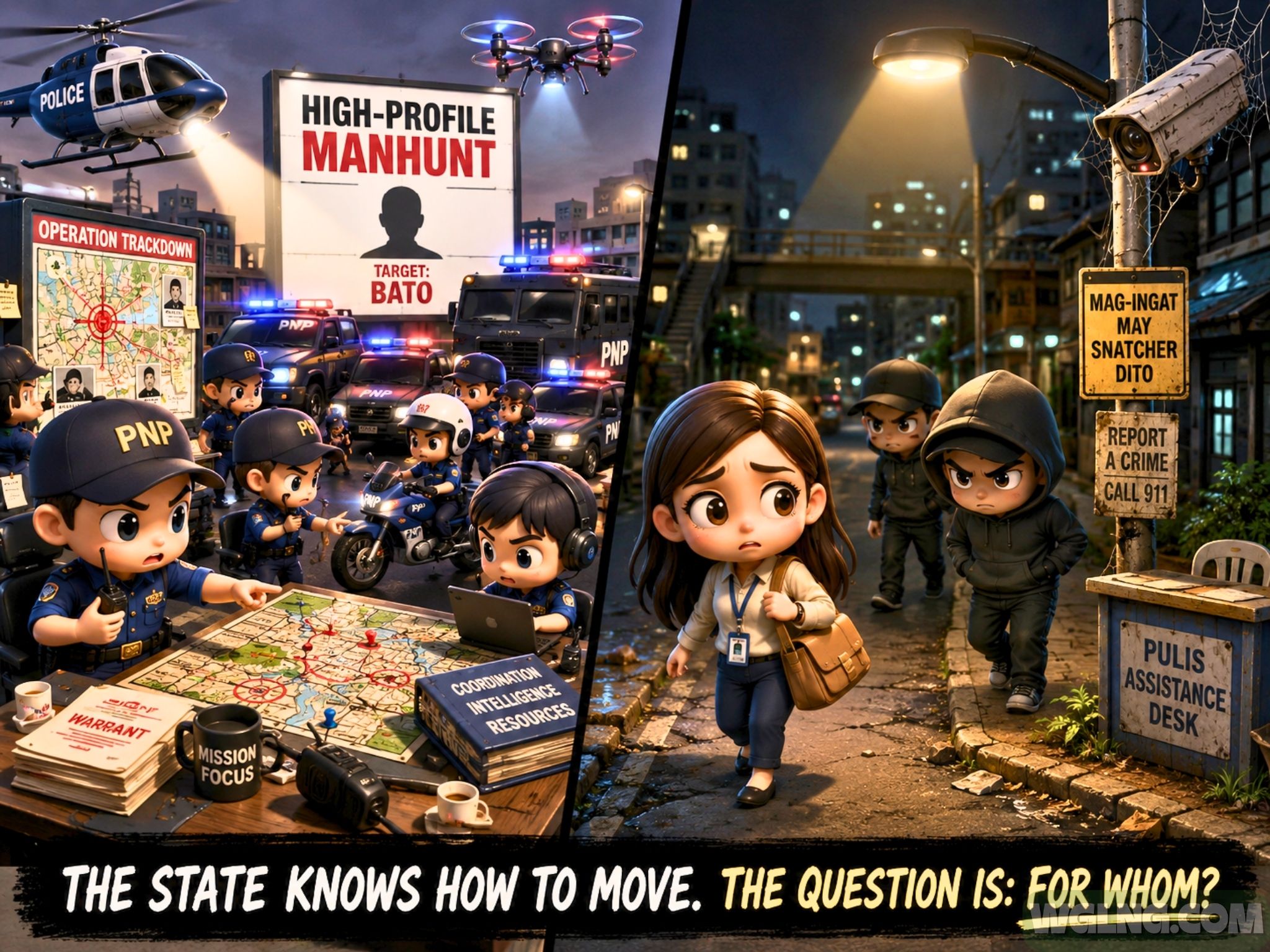
When officials and elites say the streets are safe, the question remains: safe from inside gated villages, or safe for ordinary Filipinos walking home at night?

During Duterte’s presidency, my wife and I rented an apartment in one of those Quezon City neighborhoods where you learned to keep your guard up. Filipinos know the kind. Narrow streets. Mostly low-income families. A few lower-middle-class homes here and there. The sort of place where you learned to keep your head down, walk quickly, and avoid unnecessary trips outside after dark.

Before Duterte’s drug war, I would not have dared walk around that area at night. Even daytime carried a certain unease. Muggings were common enough to become part of the neighborhood’s background noise. There were also reports of innocent civilians being killed by petty criminals who, according to residents and news accounts, were either under the influence of illegal drugs or involved in the drug trade.

Then the drug war happened.

Almost overnight, or at least that was how it felt, the neighborhood changed. The streets became quieter. The sense of menace receded. Residents seemed to reclaim public spaces that had long felt surrendered to fear. People could walk outside at night again. They could run errands, wait for transportation, or simply stand by the street without looking over their shoulders every few seconds.

That was not an abstract policy debate to me. I worked the night shift. I had to leave the apartment when most people were already asleep and take public transportation across Metro Manila. During that period, I felt safer doing so than I had before. That was my lived experience, and I know many people from similar neighborhoods understood exactly what that meant.

But that side of the story was never allowed to stand on its own.

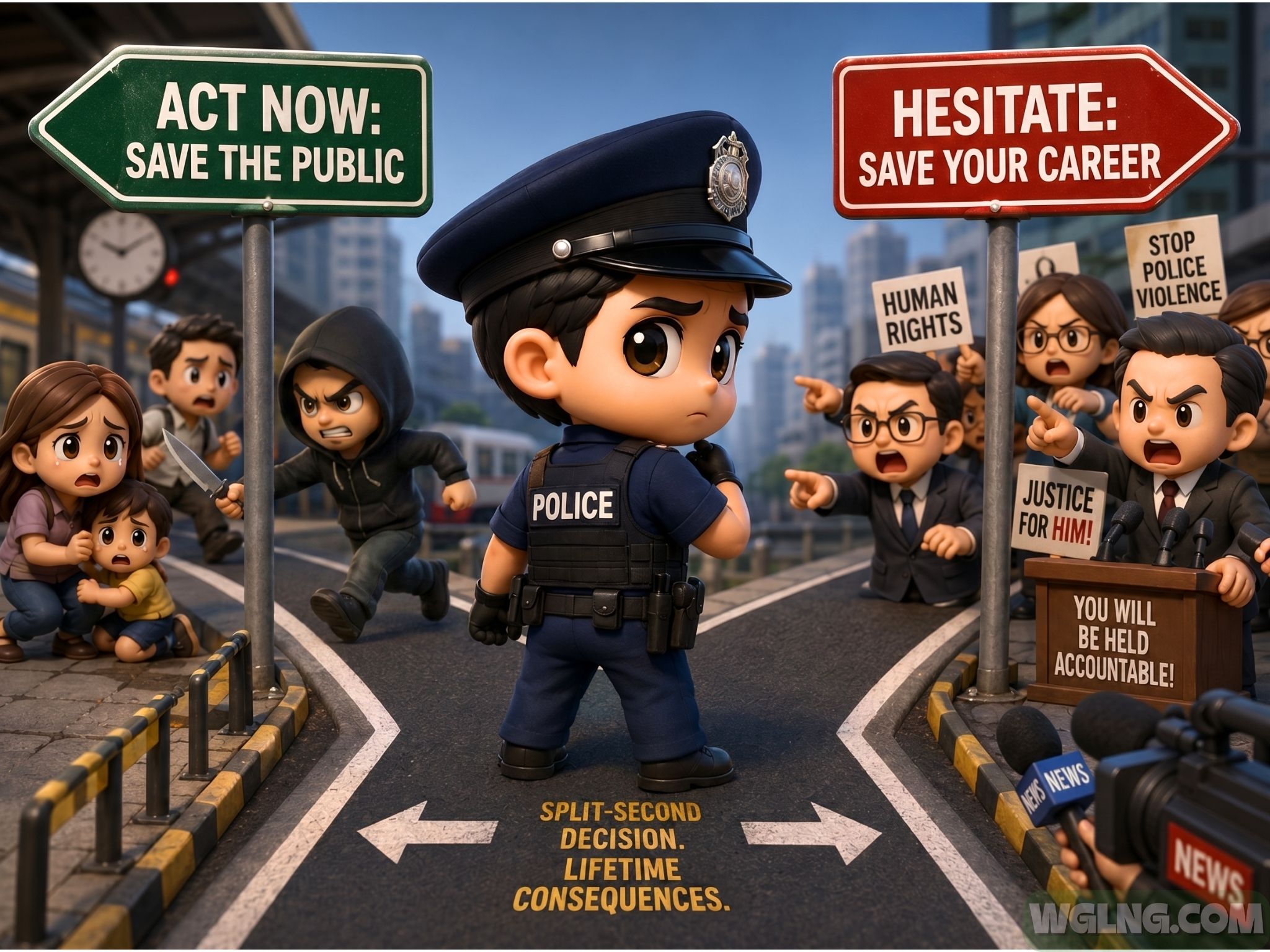
In much of the public conversation, the drug war was reduced to one narrative: state violence, abuse, and human rights violations. Those issues deserved scrutiny, of course. Any campaign that involves police operations, deaths, and state power should be questioned. But what was harder to accept was how one-sided the moral outrage often became.

People killed in police operations were repeatedly presented as victims of a cruel system. Meanwhile, ordinary citizens victimized by drug-linked crimes were often treated as background material, if they were mentioned at all. Their names disappeared quickly. Their families rarely became symbols. Their deaths did not generate the same sustained indignation from the loudest voices in media, politics, and so-called civil society.

That imbalance is what many people resent.

It is not that ordinary Filipinos are incapable of understanding human rights. It is that they also understand fear. They understand what it means to live beside a troublemaker everyone knows but no one can confront. They understand what it means to avoid certain alleys, to rush home before dark, to worry about a child walking back from school, or to hear that another neighbor was robbed, stabbed, or killed.

For many comfortable observers, crime is a statistic. For people in vulnerable communities, it is a daily negotiation with danger.

And now, years after Duterte left office, the old anxieties seem to have returned. In the neighborhood where we once lived, reports of muggings and killings have again become familiar. Whether one agrees with Duterte or not, it is difficult to deny that many communities once felt a kind of order return during his presidency — and that many of those same communities now feel exposed again.

The powerful do not experience this fear the same way. They move around in private vehicles. They live behind gates. They have guards, drivers, connections, and distance. They do not have to wait for a jeepney on a dark corner. They do not have to walk past the same group of men loitering by the street every night. They do not have to wonder whether the person approaching them is merely asking for directions or looking for a victim.

That is why the lectures often ring hollow.

When government officials or elite commentators insist that the streets are safe, one wonders: safe for whom? Safe from the back seat of an SUV? Safe inside a guarded subdivision? Safe from a press briefing, a panel discussion, or an air-conditioned office far removed from the streets they claim to understand?

The poor and lower-middle class do not have the luxury of debating public safety as an intellectual exercise. They live with the consequences of policy failure. They pay for disorder with their wallets, their fear, their mobility, and sometimes their lives.

This is the part of the drug war discussion that many people still refuse to confront. The campaign may have had excesses. It may have had abuses. It may have raised serious questions that should never be brushed aside. But it also existed in response to a real and terrifying problem that polite society often preferred to discuss only when it could be used against Duterte.

The victims of crime deserve moral attention, too.

The mothers who lost children to drug-crazed criminals deserve outrage, too.

The workers walking home at midnight deserve protection, too.

The communities that felt safer, however briefly, deserve to be heard without being mocked, dismissed, or treated as morally inferior.

My wife and I no longer live in that neighborhood, but the memory has stayed with me. I remember what it felt like before. I remember what changed. And I remember how quickly the people who never had to live there presumed to explain what the rest of us were supposed to feel.

That, perhaps, is the real divide. Not simply between pro-Duterte and anti-Duterte. Not even between left and right. But between those who discuss public safety from a distance, and those who have had to measure it one dark street at a time.

And when the people who felt safest under the old disorder start lecturing the people who feared it most, one begins to understand why so many Filipinos no longer trust the moral language of the powerful.


Categories Civic Exhaustion, Selective Justice

Sometimes a modest plate of salmon is enough to expose a larger problem with pricing, portions, and customer expectations.

Earlier today, I found myself once again asking a question I probably should not have to ask in a restaurant: What exactly am I paying for?

This time, it was at a Philippine branch of Genki Sushi, where I ordered both the Salmon Sashimi and the Salmon Belly Sashimi. Each order was priced the same at USD 6.00, or PHP 370. But when the plates arrived, the difference was hard to miss. The Salmon Belly slices were noticeably larger than the regular Salmon Sashimi slices.

There may be a technical explanation somewhere. Different cuts, different yields, different preparation standards. Fair enough. But if anything, salmon belly is usually the cut one expects to be richer, fattier, and more indulgent. So when the regular Salmon Sashimi is priced the same but served in a smaller portion, the question becomes harder to ignore. If two items sit at the same price point, it is not unreasonable for customers to expect the portions to at least feel comparable — or, at the very least, for the difference to be disclosed clearly on the menu.

My wife and I have been regulars at Genki Sushi for a few years now, and I have eaten at least once in one of their Tokyo stores. In the Philippines, this has become an all-too-familiar dining experience: prices go up, portions quietly shrink, and customers are expected to simply adjust. Most of the time, I do. But today, the difference felt too obvious to ignore.

So I asked.

To the store manager’s credit, I was given a clear answer. The Salmon Sashimi, apparently, is meant to be served at only 60 grams. The Salmon Belly Sashimi, meanwhile, is 80 grams.

That answer was more eye-opening than reassuring.

It confirmed what I had long suspected: the servings have indeed grown smaller over the years, even as the prices continue to climb. And while restaurants are free to set their portions and prices, customers should not have to discover these details only after the food has already arrived.

At the very least, serving sizes should be disclosed on the menu. If one sashimi order is 60 grams and another is 80 grams, say so. Let customers decide with full information instead of leaving them to feel surprised, disappointed, or shortchanged at the table.

I suggested this to the manager, and I was told the concern would be brought up to management. That is the usual polite ending to these things. Whether anything changes is another matter.

Maybe I am being too particular. Maybe this is just the reality of dining out now. Maybe the customer is expected to absorb every price increase, every smaller serving, every quiet adjustment disguised as business necessity.

But if eating out has become expensive enough to feel like a small decision every time, then perhaps it is not too much to ask that the food at least feels fair when it arrives.

Sometimes, it really does make more sense to go to a buffet once in a while, where the salmon sashimi is not presented like a delicate favor being granted to the poor.


Categories Consumer Disenchantment, Everyday Frictions