
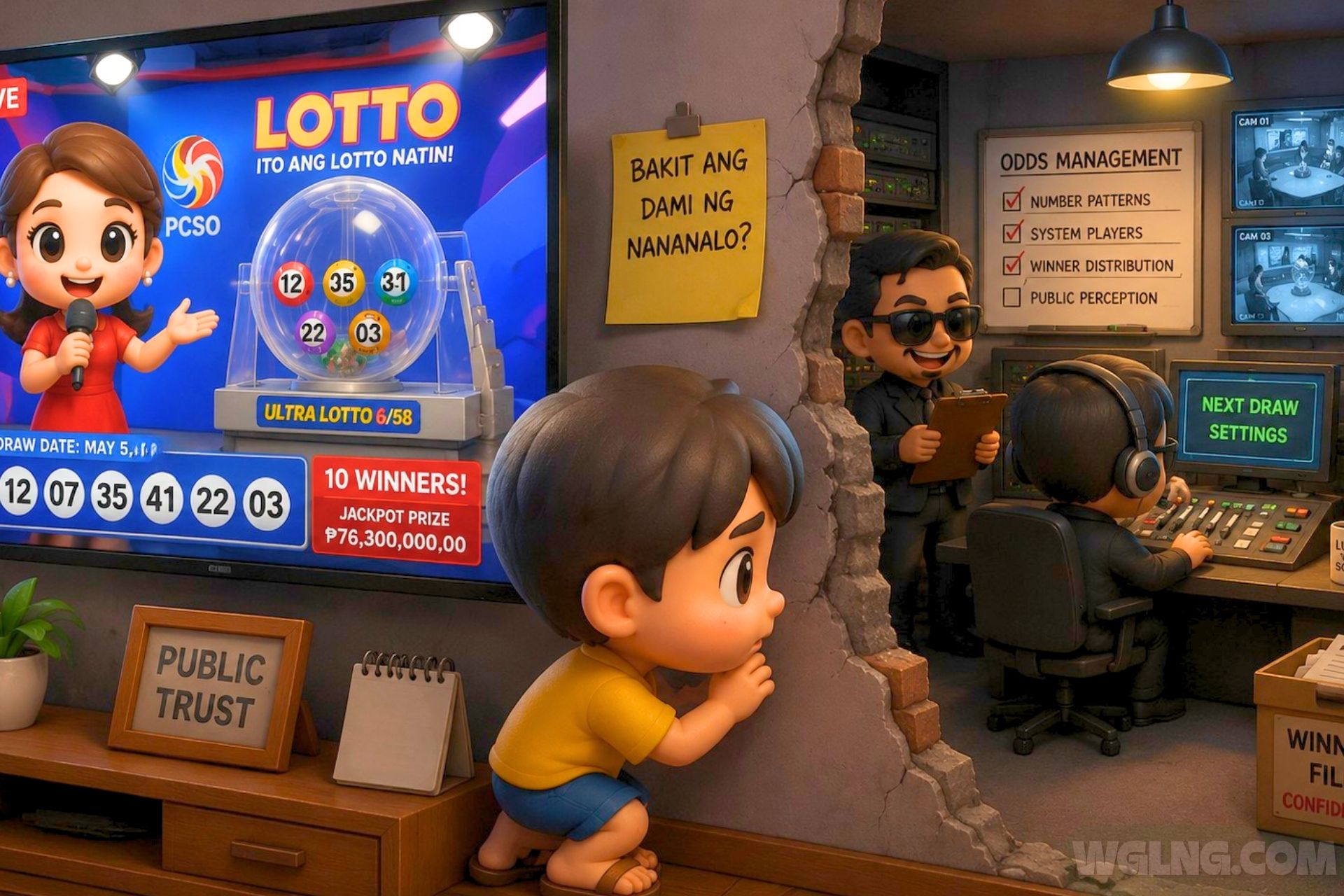
Whenever people start talking about the Philippine Lotto being “rigged,” a part of me still wants to dismiss it as ordinary Filipino paranoia. We’ve always been a nation of conspiracy theories. We speculate about everything—from celebrities and politicians to basketball games and beauty pageants.
But lately, I’ve started wondering if the growing suspicion surrounding the Lotto is really that unreasonable.
Because honestly, some of these results are becoming harder and harder to simply shrug off.
Take the recent May 5 draws. All three major lotto games reportedly produced jackpot winners in the same evening, including an eye-popping 10 winners for the Ultra Lotto 6/58. Technically speaking, I know that improbable things happen. Somebody eventually wins. That’s the whole point of lotteries. But when you live in a country like the Philippines—where corruption has touched almost every institution imaginable—you can’t blame ordinary citizens for occasionally looking at these outcomes sideways.
The problem is that trust in the system was already damaged years ago.
People seem to forget that in 2019, then-President Rodrigo Duterte himself temporarily suspended PCSO gaming operations because of alleged “massive corruption” inside the agency. That happened. It wasn’t invented by internet trolls or YouTube conspiracy channels. When something like that becomes part of an institution’s history, public doubt doesn’t simply disappear because officials later say everything is fine again.
And so now, every unusual Lotto result immediately triggers suspicion.
Personally, I don’t claim to know whether the Lotto is rigged or not. I don’t have secret documents. I don’t know insiders. But I do think the public deserves better answers than simply being told, “Trust us, it’s random.”
Because if the system is truly clean, then transparency should not be a problem.
Why not fully explain how the draws are conducted in ways ordinary people can actually understand? Why not release more detailed independent audit reports? Why not show whether these multiple winners came from scattered locations or from strangely connected circumstances? Why not give the public more visibility into how the machines, balls, and verification systems are handled before and after every draw?
Those are not attacks. Those are normal questions from citizens whose trust has been eroded over decades—not just by the PCSO, but by countless scandals involving public institutions across the country.
That’s really the bigger issue here: the Lotto is no longer just about luck. It has become tangled with the larger Filipino feeling that powerful systems often operate beyond public scrutiny. Once people begin carrying that mindset, even statistically possible events start looking suspicious.
And honestly, can we really blame them?
At this point, I think what many Filipinos want is not outrage, drama, or viral conspiracy theories. What they want is reassurance. Real reassurance. The kind built not on press statements, but on openness.
Because if the Lotto is truly fair, then the PCSO should lead the way in making the process as transparent as humanly possible. Not because the public is entitled. But because public trust, once damaged, has to be earned back—not demanded.