
I will be the first to admit: I am not an electrical engineer. I do not pretend to fully understand every technical detail behind rooftop solar, net metering, grid stability, or how power distribution systems work. So when MERALCO says there are safety concerns involving unregistered solar installations, I am willing to listen. If a household solar setup is connected to the grid, then yes, it probably cannot be treated as a purely private matter. Electricity can flow both ways, and if a system is badly installed, wrongly connected, or allowed to send power back into the lines when it should not, that could endanger linemen, neighbors, and the system itself.
That is where the bi-directional meter comes in. In a normal setup, electricity is assumed to flow one way: from MERALCO to the household. But with a grid-connected solar installation, a home may also produce excess power and send some of it back to the grid. The meter has to be able to read both directions properly. Otherwise, the billing becomes inaccurate, and the system may not be properly monitored. So yes, I understand why there needs to be some form of registration, inspection, and technical approval when a private solar system is tied to MERALCO’s distribution network. Safety is not a fake issue just because MERALCO is the one raising it.
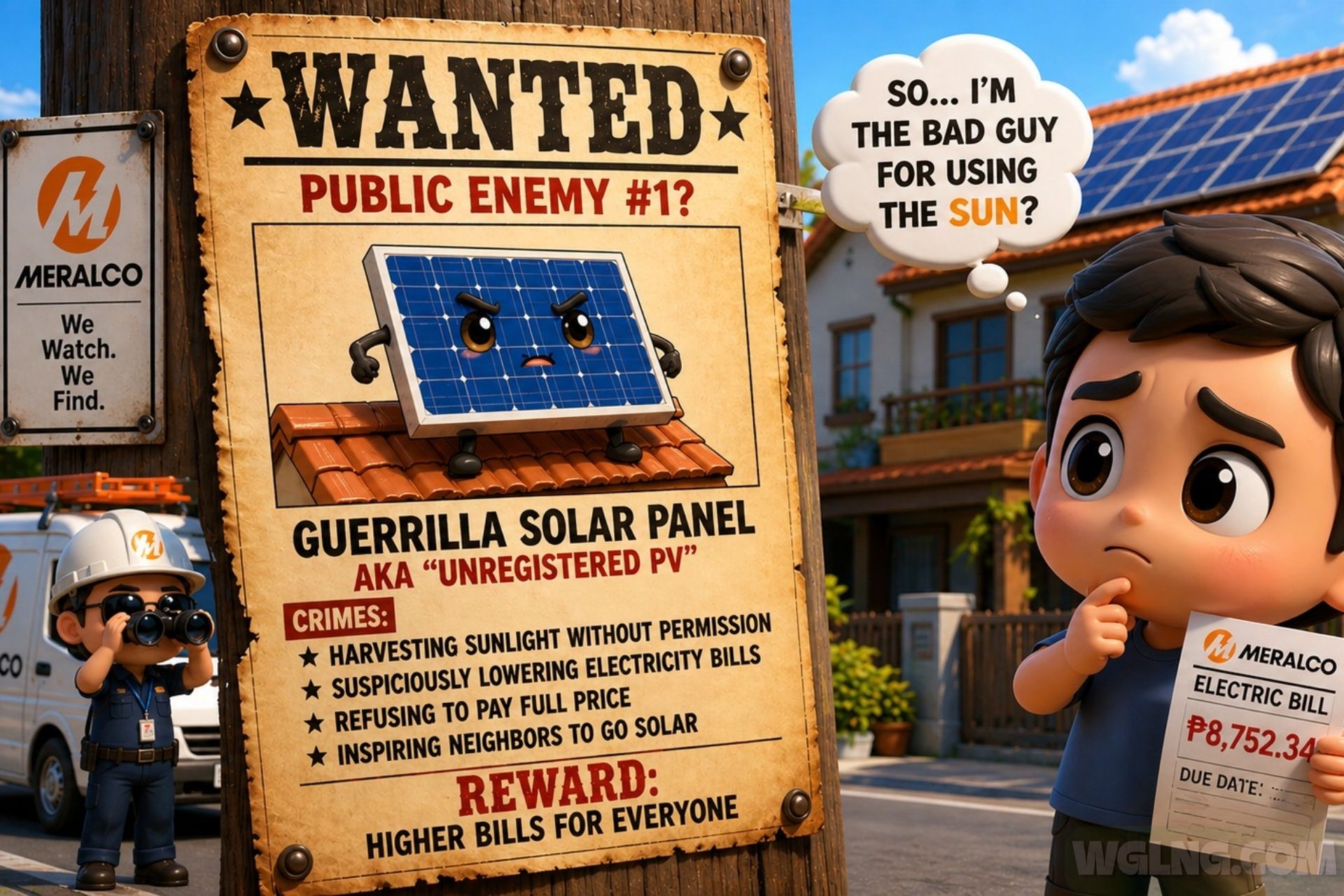
But what bothers me is the language. Words like “crackdown” and “guerrilla” make ordinary citizens sound like criminals. They make it seem as if people putting solar panels on their roofs are running some kind of underground operation. That framing feels excessive, especially in a country where electricity bills have become a monthly source of dread for many households. If people are turning to solar, maybe the first assumption should not be that they are trying to cheat the system. Maybe they are trying to survive it. Maybe they are looking for relief. Maybe they are tired of feeling helpless every time a new bill arrives.
There should also be a clear distinction between solar systems connected to the grid and solar systems that stand on their own. If a household is exporting power back to MERALCO, then I can understand why MERALCO has to be involved. But what about a small stand-alone setup that charges batteries, powers selected appliances, or runs independently from the grid? That does not seem to be the same issue. It may still need to follow building, electrical, or fire-safety rules, of course. Nobody wants unsafe wiring or poorly mounted panels flying off a roof. But if the system is not feeding power into MERALCO’s lines, it is fair to ask where MERALCO’s authority begins and ends. Based on the reporting so far, the concern appears to be mainly about unregistered systems that are grid-connected or capable of affecting the distribution network—not purely private, off-grid setups.
This is why the tone matters. If power monopoly MERALCO and regulators want people to comply, they should make the process simple, affordable, and transparent. Explain the safety issue without making citizens feel hunted. Help homeowners regularize their systems without automatically treating them as violators. Because once the language becomes too aggressive, people will naturally wonder whether this is really about safety—or about protecting a monopoly’s control over the flow of power and revenue protection. Rooftop solar users should not be framed as enemies. In many cases, they may simply be people trying to reclaim a little control over their own electricity, one panel at a time.