
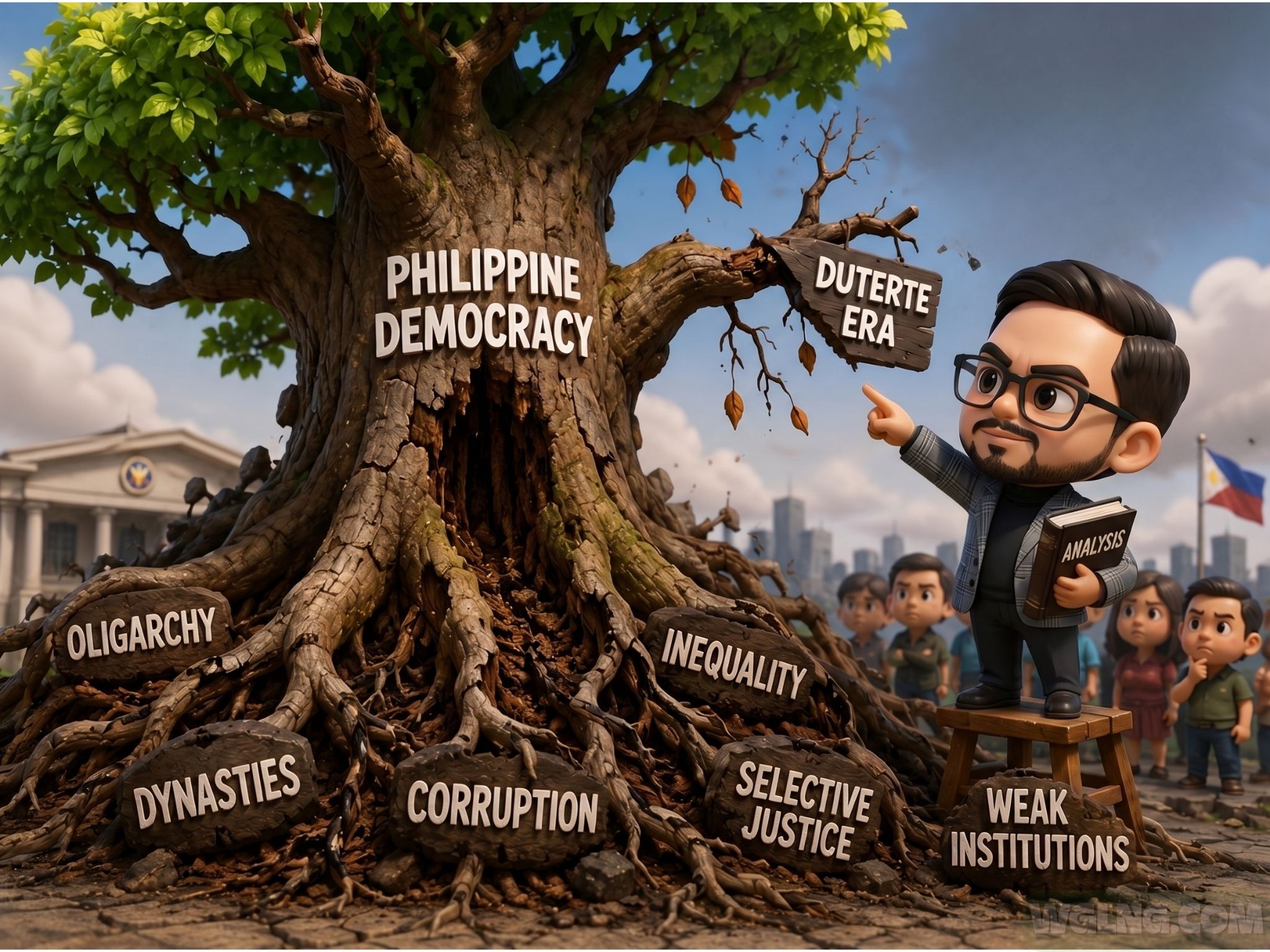
The opinion piece "Dutertismo: Scourge of PH democracy" sounds intelligent and dramatic, but once you get past the polished writing, it starts to feel less like serious analysis and more like a political sermon. The article paints “Dutertismo” as some uniquely poisonous force that suddenly corrupted Philippine democracy, while barely acknowledging that many of the country’s deepest problems existed long before Duterte ever became president.
That’s the biggest weakness of the piece. It quietly assumes that the Philippines had a reasonably healthy democracy before Duterte came along and ruined everything. But ordinary Filipinos have spent decades dealing with political dynasties, corruption, weak institutions, crime, inequality, oligarchic control, and selective justice. Duterte didn’t emerge out of nowhere. Millions supported him because they were already frustrated with the system and felt that traditional elites had failed them for years.
The article also comes across as self-important at times. The pundit repeatedly reminds readers that he “saw Duterte coming” before others did, which gives the impression that the piece is partly about validating his own political foresight. At the same time, many Duterte supporters are indirectly portrayed as manipulated, irrational, or seduced by demagoguery, instead of people reacting to real frustrations about governance and everyday life.
Another issue is the heavy use of emotionally charged language. Words like “scourge,” “toxic cocktail,” “banana republic,” and “murderous demagoguery” make the article feel dramatic, but they also replace nuance with outrage. Strong language can be effective, but when almost every paragraph sounds morally charged, the analysis starts feeling more theatrical than objective.
The commentary also slips into insinuation at times, especially when it mentions rumors of foreign funding behind Duterte’s campaign without presenting actual evidence. That kind of writing creates suspicion without really proving anything. It’s a clever rhetorical move, but not a particularly rigorous one.
In the end, the article avoids grappling with the more uncomfortable question: what if Duterte was not just the cause of democratic decay, but also a symptom of a political system that had already been failing many Filipinos for decades? That’s the deeper conversation the piece never fully confronts. Instead, it falls back on a simpler narrative of enlightened democrats versus toxic populists; a framing that may feel satisfying to anti-Duterte readers, but doesn’t fully explain why Duterte became so popular in the first place.