
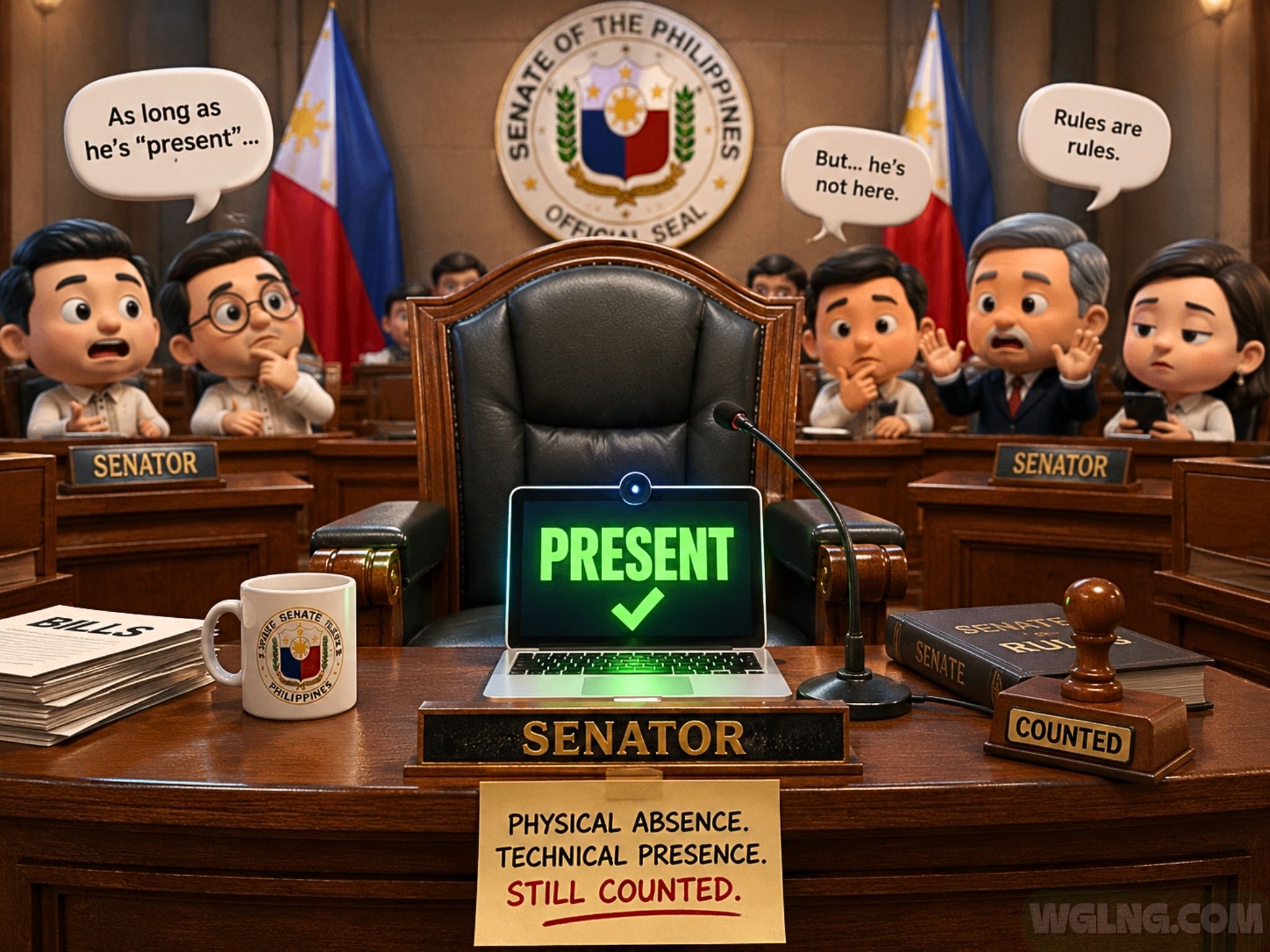
Let me say this upfront: this is not about taking the side of one Senate bloc over another. I am not cheering for the minority just because they happen to oppose the majority on this issue.
My problem is bigger than today’s numbers.
I do not want any bloc, now or later, to turn remote participation into a convenience pass.
Remote participation already exists for emergencies. The Senate rules already allow sessions through teleconference, video conference, or other reliable electronic means when there is force majeure or a national emergency — the kind of situation where the Senate cannot meet physically, or senators cannot be there in person.
That makes sense. Government should not grind to a halt during a pandemic, a major disaster, or an actual emergency.
But that is not what this moment looks like.
What we have now is a Senate in turmoil: a fragile majority, a minority walkout, questions over quorum, and growing suspicion that this rule change could benefit senators who are absent, under legal pressure, or politically useful from a distance.
So no, this is not just about Zoom links.
It is about whether senators who are not on the floor should still be counted, heard, and allowed to vote while the chamber is fighting over numbers and control.
That is where the danger begins.
Because once this door is opened too casually, it will not only matter who benefits today. It will matter who abuses it tomorrow. A senator avoiding pressure. A bloc trying to preserve numbers. A convenient vote appearing from somewhere off-camera. An absence made useful.
That should worry us.
The Senate floor is not just a counting room. It is where senators are supposed to show up, face each other, get challenged, get interrupted, defend their positions, and be seen by the public they claim to represent.
Physical presence still matters. Not because we are allergic to technology, but because democracy should involve some exposure. Some discomfort. Some accountability.
Modernize the Senate, sure. But do not modernize it into absentee lawmaking.
Remote participation has its place in real emergencies. It should not become an everyday shortcut, especially under today’s political cloud.
Senators were elected to represent the people.
Outside genuine emergencies, the least they can do is show up.