
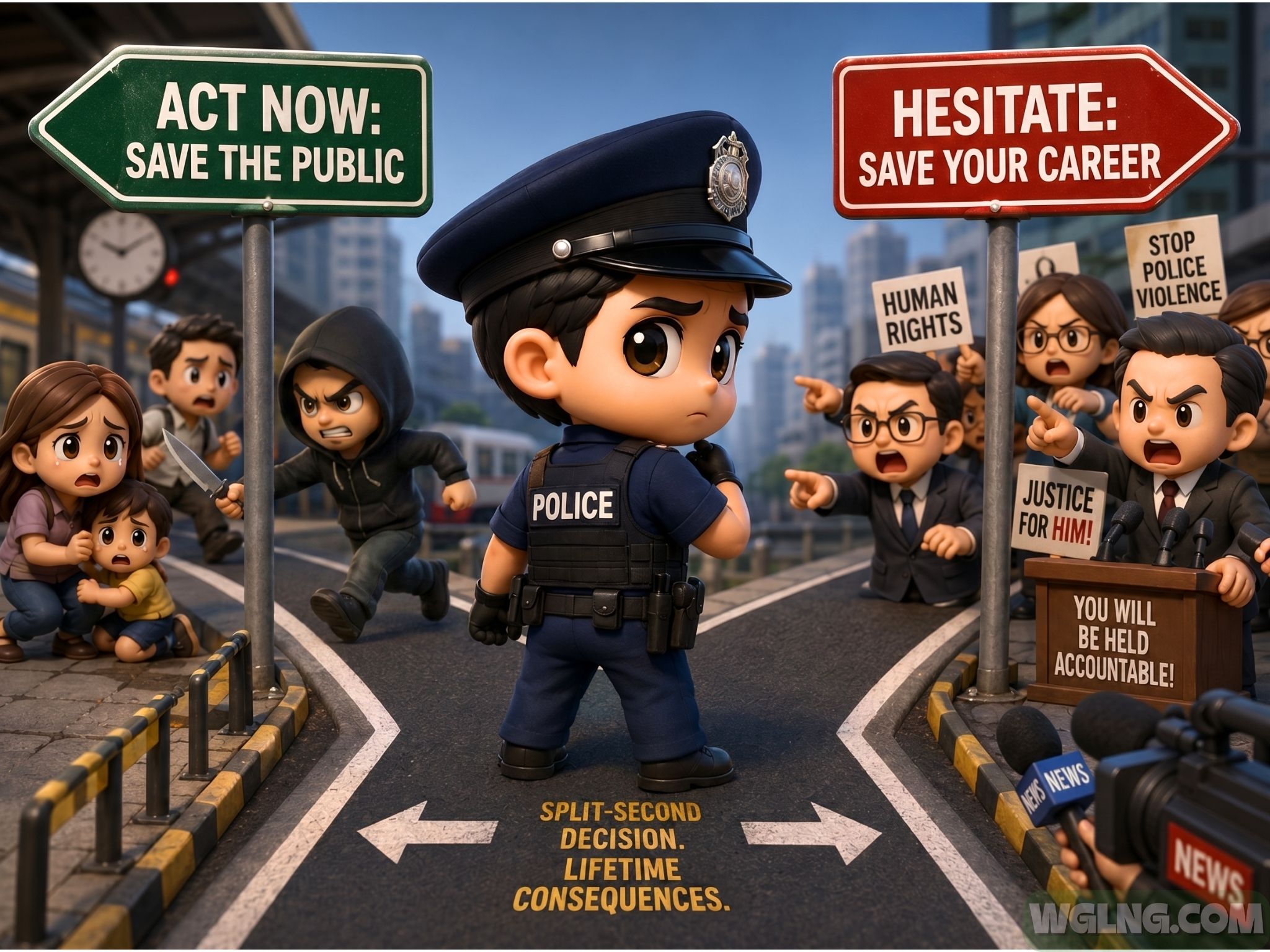
I saw an article about a Thames Valley Police officer shooting a drug-crazed, knife-wielding man inside a railway station.
Good job, I say. Not because a shooting is something to cheer about. It is not. Not because police should be handed a blank check. They should not. But a man with a knife inside a public railway station is not a theoretical problem. It is not a neat little debate for people safe behind microphones, press releases, and committee tables.
It is a threat. Right there. Right then. And in that moment, the job of the police is to protect the public.
That is what bothers me about where we are now.
Would a police officer in my own city still have the nerve to act that decisively? Or would he pause, knowing what comes next? The suspect is armed. The public is in danger. Someone could be stabbed. But the moment the officer uses force, the familiar machinery starts moving.
Politicians posture. Human rights groups issue statements. Outspoken congressmen and senators suddenly find their outrage. And somehow, the officer who stopped the threat becomes the one dragged through the mud.
Dismissal. Prosecution. Public humiliation. All because he dared lay a finger on someone endangering everyone around him.
Meanwhile, the ordinary citizen is told to wait: Wait for the investigation. Wait for due process. Wait for careful language about the suspect’s rights, background, trauma, poverty, addiction, and whatever else can soften the image of a violent offender.
Fine. Discuss those things.
But where is that same careful concern for the victim?
Where is the urgency for the commuter who could have been stabbed? For the shopkeeper robbed by someone high and desperate? For the family terrorized in their own neighborhood? For the ordinary person who does not have a lawyer, a senator, a press conference, or an advocacy group ready to speak for him?
That is the part that enrages me.
Too many powerful voices seem far more energetic when defending the criminals than when defending the public. They roar when the criminal is hurt. They mumble when the victim is buried, traumatized, or left to fend for himself.
And at some point, we have to stop pretending this has no consequences.
When violent drug offenders are constantly treated as people to be rescued from accountability, what message does that send? When every police action is treated as brutality before the facts are complete, what does that do to the officers who are supposed to protect us?
Who benefits from that hesitation? Certainly not the ordinary citizen.
I am not saying every suspect should be shot. I am not saying police abuse should be excused. Any officer who brutalizes the innocent, plants evidence, or uses the uniform as a license for cruelty should face the full force of the law.
But stopping an armed attacker in a public place is not abuse. That distinction matters.
A knife-wielding assailant is not the moral center of the story just because he can be described with words like poverty, trauma, addiction, or social injustice. Those things may explain parts of a life. They do not erase the danger he creates when he threatens people with a weapon.
The public is the moral center of the story. The victims are. The people trying to get home alive are.
That Thames Valley officer saw a threat and acted before innocent people paid the price. That should not be controversial.
So why does it feel controversial here?
I do not want lawless policing. I want a country where police can act decisively against an immediate public threat without being politically destroyed for doing their job. I want a society that can defend human rights without coddling violent criminals.
And I want to know why the people who are always loudest for drug offenders are so often quietest when ordinary citizens become their victims. The people who keep mistaking coddling for compassion know exactly who they are.