
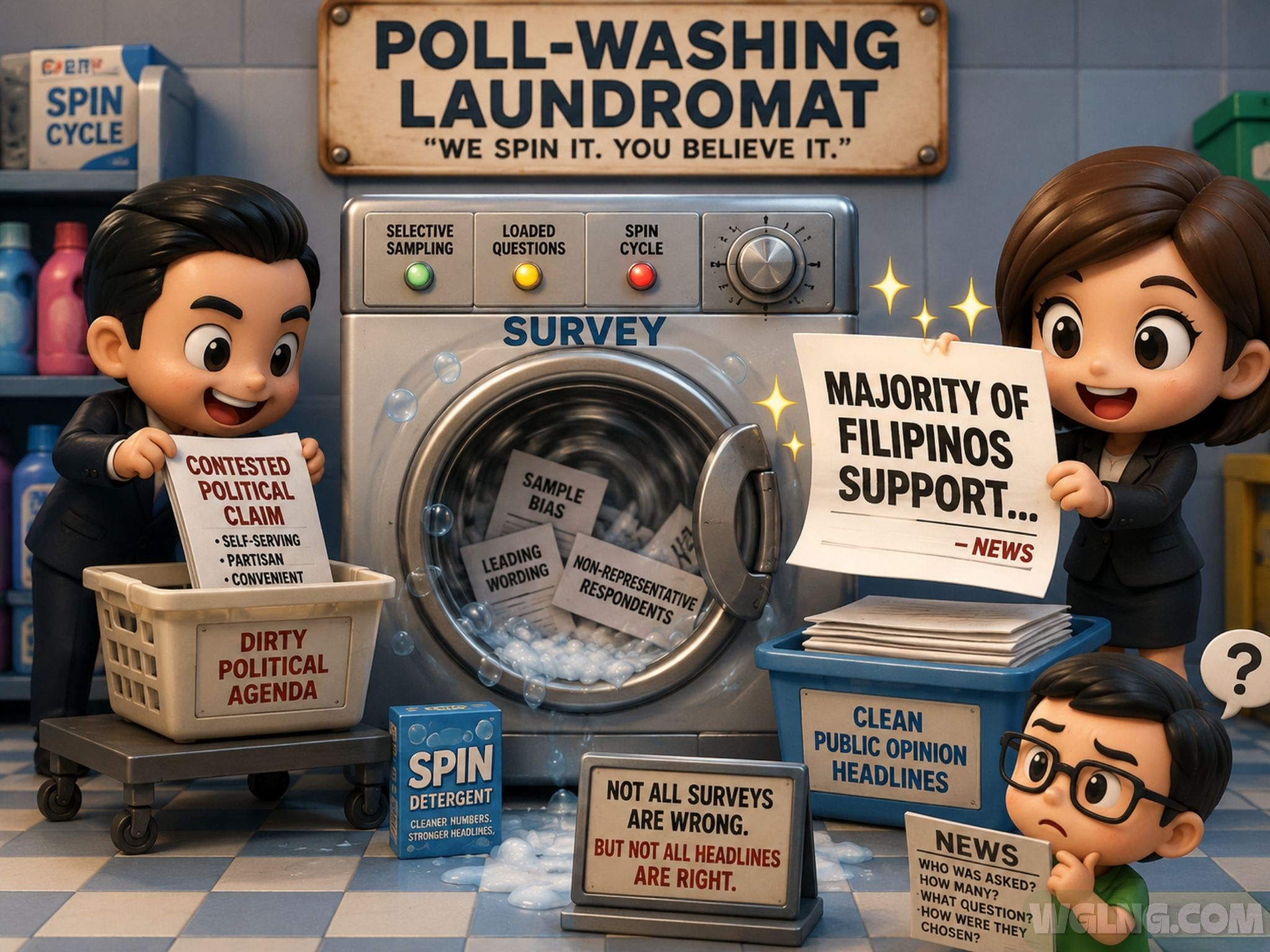
I have no interest in joining the latest round of political hair-pulling over who should sit where in the Philippine Senate. The factions can argue over titles, chairs, and alliances all they want. That is their chosen theater.
What bothers me is how easily some reports try to make that theater look like public consensus.
When a headline says a “majority of Filipinos” support a politician’s leadership role, it sounds big. It sounds settled. It sounds as if the country has already spoken. But as an ordinary reader, I think we are allowed to ask a few basic questions before accepting that kind of claim.
Who were asked? How many were asked? How were they chosen? What exactly was the question? Were the respondents really a fair picture of the country, or just people reached by a particular polling method? These are not questions only experts should be allowed to raise. They are common-sense questions.
And this should apply no matter which side benefits from the headline. A survey should not become “the voice of the people” just because it is useful to one camp today. Tomorrow, the same shortcut can be used by the other camp.
That is my frustration. The problem is not only the survey. It is the way the reporting frames it, as if a complicated political fight has suddenly been blessed by public opinion.
Sometimes, the headline does not inform us. It herds us.