
Simon Who?
For casual followers of XG, the name Simon may not immediately ring a bell. For ALPHAZ, it does.
Simon, also known as JAKOPS, is Junho Sakai, the former XGALX chief and longtime creative figure closely associated with XG’s formation, sound, image, and mythology. For years, he was not just some background executive whose name sat quietly in the credits. He was part of the story fans were told about XG — the architect figure, the one who helped shape the group before the world knew who Jurin, Chisa, Hinata, Harvey, Juria, Maya, and Cocona would become onstage.
That is why his legal trouble was never going to feel like a small side item.
Back in February, Simon was arrested in Japan in connection with a drug case involving cocaine. Reports said the incident was tied to a hotel in Aichi Prefecture, around the time XG had been in Nagoya for the Japan leg of their second world tour. Japanese and international reports at the time identified him as XG’s producer and said cocaine and suspected cannabis were found in the room. The matter later narrowed into a charge involving cocaine use.
After the case became public, Simon apologized. He said XG’s members were not involved and were not at fault. He also announced that he was resigning as company representative. That distinction mattered then, and it still matters now. Whatever people think of Simon, the group members should not be made to carry the moral weight of an adult executive’s actions.
Now we have the court decision.
The Court Decision!
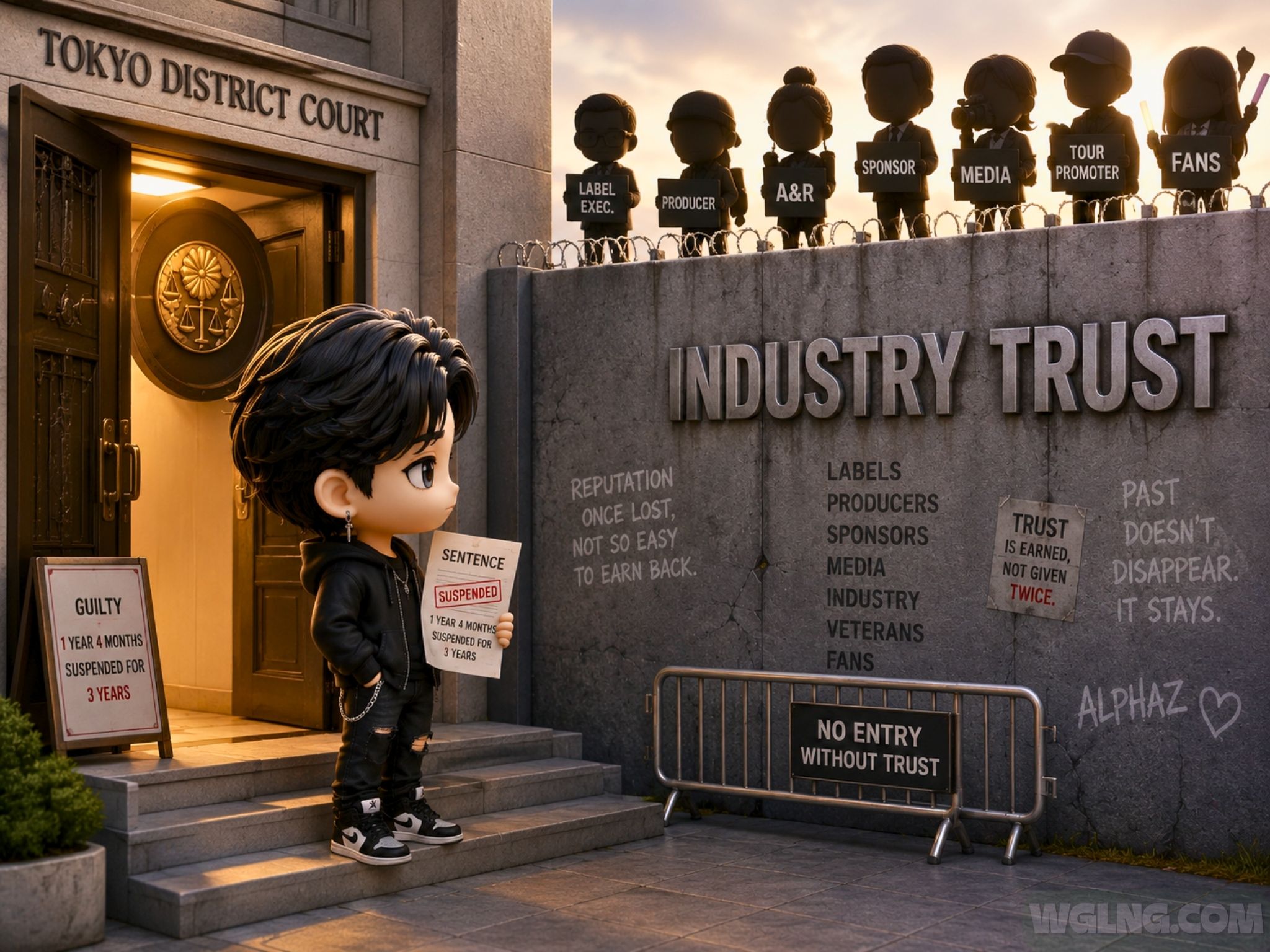
On June 1, the Tokyo District Court handed Simon a guilty verdict: one year and four months of imprisonment, suspended for three years.
That means he was convicted, and the prison sentence is real on paper. But he does not serve the jail time immediately. The sentence is suspended. If he stays out of qualifying legal trouble during the three-year suspension period, he avoids prison for this case. If he reoffends and the suspension is revoked, that prison sentence can come back into play.
To many people, that will sound light. And honestly, from an ordinary person’s gut-level view, it is easy to see why. Cocaine use is not a parking violation. Japan is known for being strict with drugs. For someone connected to a high-profile act, and one with young fans and global brand ambitions, “convicted but no immediate jail time” can feel like a soft landing.
But there is also the legal side. For a first-time personal-use type drug conviction, especially with an admission of guilt, remorse, and a defense argument built around treatment and low risk of reoffending, a suspended sentence does not appear to be shocking in the Japanese legal context. Prosecutors had sought one year and six months. The court gave one year and four months, suspended for three years.
So yes, it can feel light. But it may not be legally unusual. The more interesting question is what happens outside the courtroom.
A suspended sentence keeps Simon out of prison for now. It does not automatically restore his position, his credibility, or the trust of the people who once placed professional confidence in him. That is the harder part. Courts deal in charges, evidence, sentences, and conditions. The entertainment industry deals in something more fragile: reputation.
And reputation is not restored by technicalities.
Can Simon Redeem Himself?
It may be too early, and frankly too presumptuous, to declare that Simon is finished in the industry. I do not know what people inside Avex, XGALX, or the Japanese entertainment community truly think. I do not know who still believes in him privately, who feels betrayed, who is willing to give him another chance, or who has already closed the door.
But from the outside, it is hard to imagine an easy path back.
Entertainment is built on trust: trust from artists, staff, labels, sponsors, venues, media, and fans. In XG’s case, that trust is even more delicate because the group is not simply another act moving through the usual pop machinery. XG has been carefully built as a global project, with a distinct identity, a loyal fanbase, and rising international visibility. Anything that threatens that momentum will be treated seriously.
Simon may have avoided immediate jail time. That is one thing. Avoiding professional exile is another.
There is also a difference between being legally allowed to move forward and being welcomed back into the same room with the same authority. The law may say he has a chance to rebuild. The industry may quietly decide that the risk is too high. Both things can be true.
For XG fans, the cleanest position remains the same: support XG, do not blame the members, and be honest about what happened. Simon was important to the XG story. That cannot be erased. But importance is not immunity.
If anything, the sentencing closes one chapter and opens a more uncomfortable one. The court has spoken. Now comes the longer judgment — the one made by colleagues, partners, sponsors, and the public.
That judgment may take far longer than three years.